Most patients have made their assessment within the first minute. The verdict has little to do with clinical records and everything to do with whether the person standing in front of them feels steady, competent, and present.
That read forms fast, and largely below conscious thought. A growing number of UK dentists are treating the first minute as something to be built deliberately, not left to personality.
Dr Ahmed, Fulham Road Dental, puts it - “The first minute is not about dentistry. It is about helping someone feel seen, heard, and safe enough to engage.”
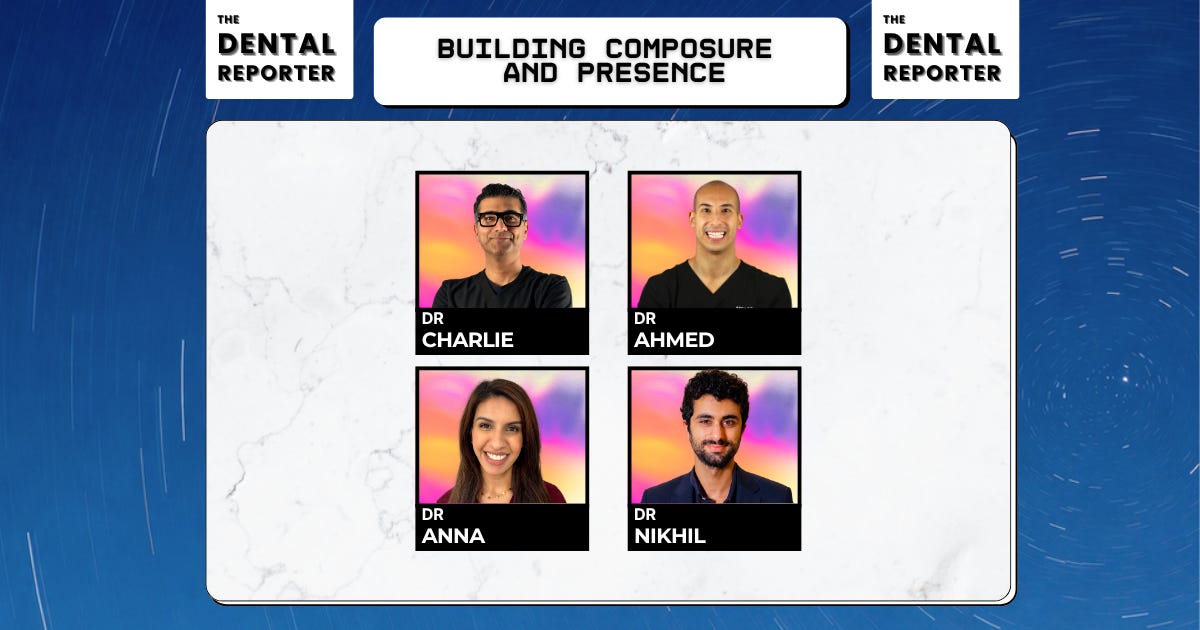
Contributors
Dr Charlie Attariani, Principal Dentist, EGO Dental Clinic
Dr Ahmed Omran, Associate Specialist Orthodontist, Fulham Road Dental
Dr Anna Najran, Associate Dentist , Dawley Dental Practice
Dr Nikhil Kanani, Associate, Battersea Park Dental


Dr Charlie Attariani, Principal Dentist, EGO Dental Clinic
“It is all about this attention to detail that not just anxious patients, but all patients appreciate. Putting yourself in your patient’s shoes and seeing what matters to them.”
Dr Ahmed, Associate Specialist Orthodontist, Fulham Road Dental
“The first minute is not about dentistry. It is about helping someone feel seen, heard, and safe enough to engage.”
Dr Anna Najran, Associate Dentist , Dawley Dental Practice
“Patients may not always understand the technical side of dentistry, but they always remember how safe, calm, and cared for you made them feel”
Dr Nikhil Kanani, Associate, Battersea Park Dental
“Remove a physical hierarchy and make the patient feel more relaxed.”
When trust forms before the clinician walks in
The first minute rarely begins at the surgery door.
Dr Anna, Dawley Dental Practice, had a patient contact her through Instagram because calling the practice felt like too much. The messages that followed, answering questions, understanding her anxiety, learning what had kept her away, became the foundation of the relationship before she had set foot inside.
“I took the time to answer her questions, understand exactly what was making her nervous, and learn about her previous experiences so I could tailor my approach accordingly,” Dr Anna explains. By the time the patient arrived, the clinical encounter had already started.
Dr Nikhil, Battersea Park Dental, engineers the same head start through pre-appointment forms. A questionnaire sent before the visit does two things: it surfaces what the patient needs clinically, and it tells the dentist who they are walking in to meet.
What the body says before the dentist does
Most experienced dentists describe the same physical routine, arrived at independently. The dentist collects the patient from the waiting room rather than sending a nurse. They greet by name, walk them to surgery, and position themselves at eye level once both are seated.
Dr Nikhil, Battersea Park Dental, puts it plainly. “Make sure your dental chair is at the same height as the patient and you are facing each other, eye to eye, knee to knee. This removes a physical hierarchy and can make the patient feel more relaxed.”
Dr Anna applies the same logic throughout, sitting alongside patients rather than standing over them, keeping the conversation from feeling clinical.
The register underneath the positioning matters too. Dr Nikhil describes it in simple terms. “Tone: warm, soft and friendly. Like a guest coming to your home.”
Who sets the pace
Most dental anxiety is a control problem. Patients are not afraid of the drill, they are afraid of not knowing when it starts.
Dr Charlie has a name for it. “Anxiety often comes from a perceived loss of control. By slowing my pace and adjusting my physical presence, I signal calm, safety, and respect.”
The simplest way to solve a control problem is to hand control back. Dr Anna does this before treatment begins, establishing a stop signal, usually a raised hand, and stating plainly that the patient can pause at any point. The pace, she tells them, is theirs.
“I find that when patients feel listened to, respected, and in control, their anxiety often starts to reduce naturally,” Dr Anna says.
The effect is practical. A patient who feels in control moves differently, breathes differently, and requires less management across the rest of the session. None of this costs more chair time. It costs a better first minute.
What the surgery is doing for the clinician
At EGO Dental Clinic, white noise machines run in each surgery during drilling and suction. Lighting, scent and tactile detail are chosen with the same attention. None of it is incidental.
Dr Charlie describes the room as part of the clinical toolkit. “It is all about this attention to detail that not just anxious patients, but all patients appreciate. Putting yourself in your patient’s shoes and seeing what matters to them.”
The logic is practical, a calmer room means less work in the first minute. The clinician does not have to compensate for a space that is raising the patient’s tension. When the interpersonal and the environmental work together, one reduces the load on the other.
When the first minute is the easiest minute
Most of what has been described happens under controlled conditions. The harder test comes when something shifts mid-treatment - a change in plan, a misplaced instrument or something takes longer than anticipated. Patients read that tension before they can name it.
“Patients may not always understand the technical side of dentistry, but they always remember how safe, calm, and cared for you made them feel,” Dr Anna says.
Dr Anna prepares for those moments before the appointment starts. Having a plan B, and sometimes a plan C, means any pivot happens without the energy in the room changing. The patient never sees the gap.
From bedside manner to clinical infrastructure
Something is shifting. What was once described loosely as communication skills or personal style is being examined with more intent. The choreography of the greeting, the pacing of the voice, the deliberate handover of control. Clinicians are noticing what works and building it in.
For Dentists, that attention is worth developing. Composure compounds. The patient who feels safe enough to return, to refer, to trust an extended treatment plan. That relationship often traces back to how the first appointment began.
With thanks to the 4 dentists who shaped this edition