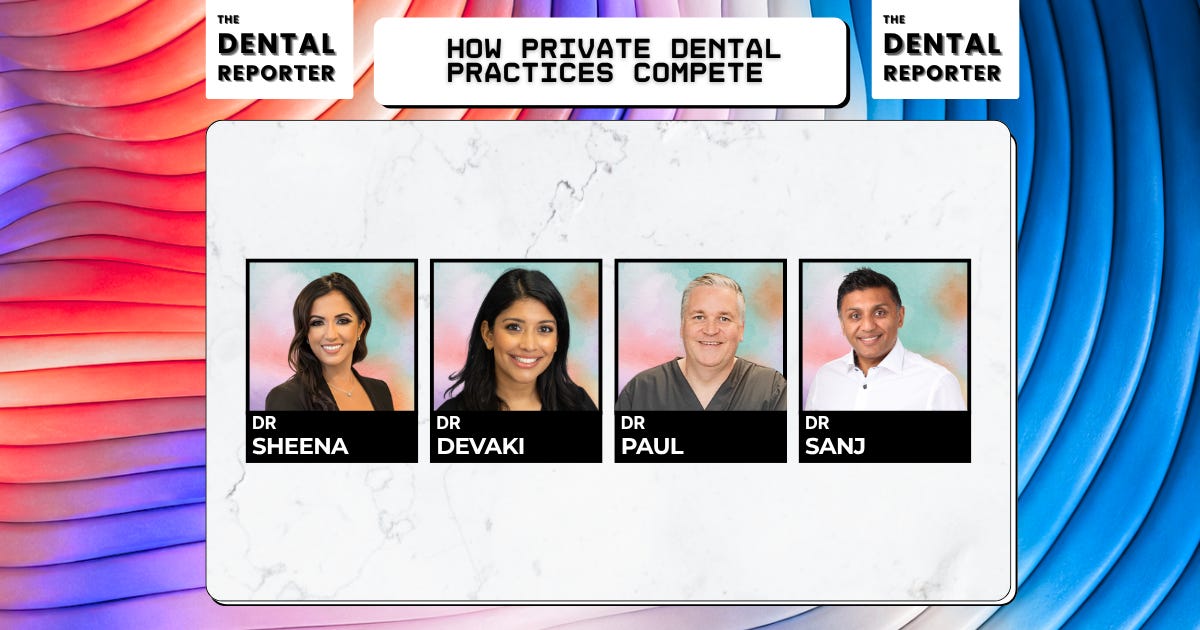
Behind every private practice that holds its patients for decades sits a small set of decisions made early and held with discipline. Four principal dentists describe what those decisions look like, what they cost, and what the wider industry gets wrong about them.
Contributors


Dr Sheena Tanna, Billericay Dental Care
“Patients don’t stay because of one great appointment. They stay because every interaction feels consistent, personal, and considered.”
Dr Devaki Patel, Cheam Village Dental Studios
“Patients may not remember the technical aspects of the treatment but they will always remember how you made them feel.”
Dr Sanj Bhanderi, ENDO 61
“We rely on time-based longevity, our reputation, and word of mouth amongst the profession and local referring colleagues, and that continues to grow.”
Dr Paul Middleton, The Dental Lounge
“Those relationships are something that can’t be replicated in a target-driven, corporate environment.”
The decision that sets a direction
Most practices begin the same way: watching what the local market is doing, then trying to match it. The turning point, for the principals who build something durable, is the moment they stop.
Dr Sheena Tanna, Billericay Dental Care, describes that shift as a deliberate act of definition. Her practice built a vision, mission, and set of core values, then organised the entire operation around them. Individual training plans for every team member, a structured internal team with defined leads, and digital scanners in every surgery followed from that foundation. The practice also stayed connected to its wider community through schools and charity work. “When patients started describing us as feeling like family, I knew we’d got it right,” she says.
For Dr Devaki Patel, Cheam Village Dental Studios, the direction came from direct experience of NHS practice. The intent was to replace the pressured, time-limited rhythm of that environment with something different: a boutique experience built around listening, quality, and exceptional customer service. Patients began returning feedback that referenced the welcome, the time taken to explain, and the care that extended beyond the appointment itself. Word-of-mouth referrals confirmed the call had been right.
Dr Paul Middleton, The Dental Lounge, made a more specific competitive decision. Local practices were concentrating on short-term care and cosmetic dentistry. The Dental Lounge, with a history stretching back to the 1950s, chose instead to focus on long-term relationships and continuity of care. Patient feedback made clear that this audience existed and was underserved.
Dr Sanj Bhanderi, ENDO 61, arrived at his decision differently. After eleven years as an associate, he had the clinical and academic depth to establish a specialist endodontic referral practice in Manchester. The independence was the point. His model was built around professional reputation and referral networks from the outset, which placed him outside the competitive pressures facing general private practices.
What principals actually say about price
A patient who has seen a cheaper quote online is a test of positioning. How a principal responds in that moment reveals more about their practice’s identity than any marketing material does.
Dr Sheena’s approach is direct. Using digital scans, she turns the conversation into something the patient can see for themselves, making it a shared understanding rather than a clinical directive. She names the cost of doing nothing. “When patients feel informed, supported, and not pressured, they stop comparing price and start deciding who they trust,” she says.
Dr Devaki takes a similar line but draws on specialist training. As a Specialist Orthodontist with three further years of training beyond dental school, she itemises what is included in the fee, explains the nature of each appointment, and names the materials being used. There are no hidden costs in her pricing. Patients are given space to consider their options, and most, she notes, do place value on specialist care even when the fees are higher.
Dr Paul’s response is more spare. His reply to a patient citing cheaper options online is to acknowledge that cheaper options exist, and that the practice charges what it believes it is worth. The practice invests in its environment and pays its staff properly. “The fees we charge are what we truly believe we are worth and we do our very best to live up to them,” he says.
Dr Sanj monitors fees across the specialist endo market, pricing competitively without overstating what the reputation warrants. Fee queries are rare. When they arise, his team responds by drawing on his 25 years of specialist experience and teaching background to reassure patients before a question reaches him.
Where scale becomes a disadvantage
Corporate dental groups have built significant operations across the UK. Their structural strengths are real: buying power, national brand recognition, and tested systems at volume. The gap, as the principals here describe it, shows up in a different register.
Dr Sheena locates it in the absence of connection. “Corporate groups are strong on scale, systems, and visibility, but in my experience, they can lose the human element,” she says. Patients in corporate settings, she observes, can feel processed rather than known. Her practice’s social media presence uses the real team and their real personalities rather than produced content. Patients often say they feel they know the practice before they arrive.
Dr Devaki points to flexibility and accountability. An independent practice can respond to individual patient needs without the constraints of a standardised approach. Continuity of care, where patients see the same familiar faces, is a structural priority rather than an aspiration. That consistency shapes how patients feel about the practice over time.
Dr Paul’s analysis is direct. Low staff turnover, both clinical and administrative, means patients build relationships with everyone in the practice, not only the dentist. “Those relationships are something that can’t be replicated in a target-driven, corporate environment,” he says.
Dr Sanj operates outside this comparison almost entirely. His referral base grows through strategic professional alliances and word of mouth within the dental profession. Corporate marketing budgets are not a variable he competes against.
The advice worth questioning
The standard list of private practice growth tools is familiar. Membership plans, before-and-after photography, Google reviews, and investment in the aesthetic of the waiting room all carry genuine value. The principals featured here do not reject them. Several use them. What they question is the weight the industry places on each.
Dr Sheena’s position is considered. An over-polished practice can read as slightly impersonal. Patients, in her experience, respond to something less formal: comfort, recognition, and a sense of belonging. “That sense of belonging is what builds loyalty, not how perfect things look,” she says.
Dr Devaki makes a pointed observation about investment priorities. Aesthetics without sufficient appointment time and proper team development produce a hollow result. “It’s meaningless having a beautiful practice if you’re not giving patients sufficient appointment times and investing in your team,” she says.
Dr Paul takes the sharpest position on social media. A digital presence is necessary, but most of the patients his practice retains do not choose their dental care by scrolling. They arrive through trusted recommendation, often from patients who have been with the practice for years. The referral is the marketing channel. Social media supports it, at best.
Dr Sanj’s specialist model confirms the point from a different angle. SEO and public-facing social media have no meaningful role in his growth strategy. Warm communication, a modern and comfortable environment, and cultivated professional relationships have built a self-sustaining practice without a dedicated marketing budget.
The operating principle that does not change
Asked to name the single decision or standard that most determines whether a patient stays for years, all four answers converge. Each answer sounds different. The underlying principle does not.
Dr Sheena describes it as consistency of the patient experience, engineered through clear standards rather than left to individual judgement on a given day. “Patients don’t stay because of one great appointment. They stay because every interaction feels consistent, personal, and considered,” she says. Systems govern how patients are welcomed, how treatment is explained, and how continuity with the same clinician and nurse is maintained.
Dr Devaki returns to warmth and time. Appointments are not rushed. Conversations are open and honest. “Patients may not remember the technical aspects of the treatment but they will always remember how you made them feel,” she says.
Dr Sanj reduces it to the first point of contact. Warm, caring communication from the moment a patient reaches out is the standard he would protect above all else.
Dr Paul extends the principle beyond the appointment itself. Small gestures accumulate: flowers on a significant birthday, a word of condolence in a bereavement, a book or holiday recommendation that follows a conversation during treatment. Patients know they are not just a direct debit. Word travels.
The competitive question for principals running private practices is not where the marketing budget sits. It is which operating principles were fixed early, held without compromise, and allowed to work quietly across hundreds of patient interactions over time. Marketing tools and strong clinical standards remain necessary entry points. What separates the practices that grow in patient loyalty year on year from those that plateau is the consistency of the experience that sits behind them. The practices that understood this a decade ago are not waiting to compete. They are already ahead.
With thanks to the 4 dentists who shaped this edition