
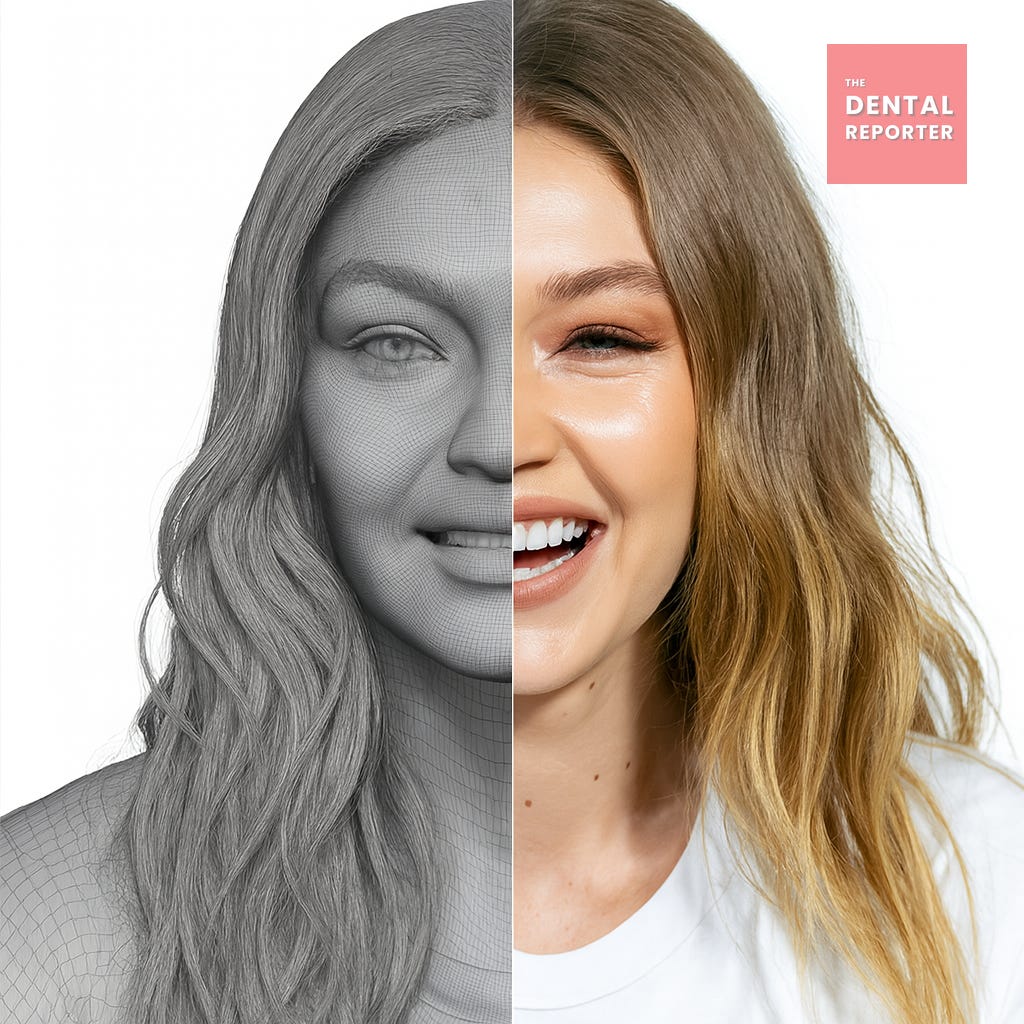
In a quiet London dental studio, a patient sits before a large screen, watching their face transform in real time.
No moulds.
No guesswork.
Just an algorithm predicting the perfect smile - balanced, proportionate, and human.
Once upon a time, this kind of aesthetic planning was guided by instinct, sketches, and years of experience.
Today, it’s guided by data.
From Impressions to Predictions
Before AI, smile design was a craft of touch and intuition.
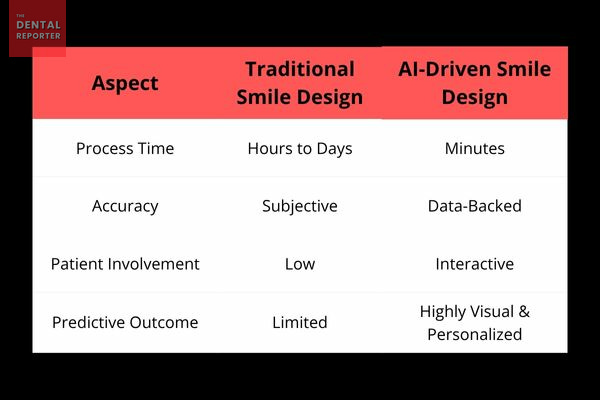
Dentists relied on physical impressions, wax-ups, and a patient’s imagination to visualize outcomes. The process was skilled but subjective, what looked “perfect” on the model didn’t always look perfect in the mirror.
Now, facial recognition and machine learning models are rewriting that story. Using intraoral scans, 3D imaging, and facial symmetry mapping, AI tools can predict how a patient’s teeth will harmonize with their natural expressions, down to the smallest millimeter.
Old vs New: A Quick Comparison
The Smile Design Formula:
Scan → Simulate → Smile
Step 1: Scan
High-resolution facial and intraoral scanners capture more than just teeth, they record the dynamics of lips, eyes, and facial symmetry.
Every contour is data.
Step 2: Simulate
Machine learning models analyze this data to generate multiple design variations, each calibrated to facial proportions, skin tone, and even emotional expressiveness.
Patients can preview every version instantly, like trying on smiles in a digital mirror.
Step 3: Smile
Once approved, the digital model guides clinical execution, aligners, veneers, or restorations, ensuring the final result mirrors the simulation with near-perfect precision.
Beyond the Aesthetic: A New Patient Experience
For clinics, AI isn’t just a design tool, it’s a trust tool.
By giving patients a data-driven preview, dentists bridge the gap between imagination and reality.
It reduces uncertainty, shortens consultations and often case acceptance rates.
And yet, the art remains. Dentists must still decide which version of perfection feels human. Because no algorithm, no matter how advanced, can sense emotion in a smile - that’s the domain of empathy and experience.
The Future Smile
The next generation of “AI dentists” won’t be programmers - they’ll be designers fluent in both art and algorithm.
They’ll combine intuition with data, facial emotion with machine precision, and patient trust with digital transparency.
Tomorrow’s perfect smile will start with a scan.