
Longevity in dentistry is not a finish line. It is a way of working that protects your standards, your judgement, and your appetite for the job over decades.
Early on, most clinicians measure progress through skills gained, cases completed, and clinical outcomes. Over time, the definition expands. It includes how you manage pressure, how you lead teams, how you make decisions when time is tight, and how you stay aligned with the kind of care you want to deliver.
This feature looks at the long game through the eyes of practising dentists. We explore how their view of longevity has shifted since their early years, the mindset changes that made work feel more sustainable, and the habits that keep quality steady when stakes rise. We also examine what they have stopped doing, even when it appears efficient, and the routines outside the clinic that quietly shape performance inside it.
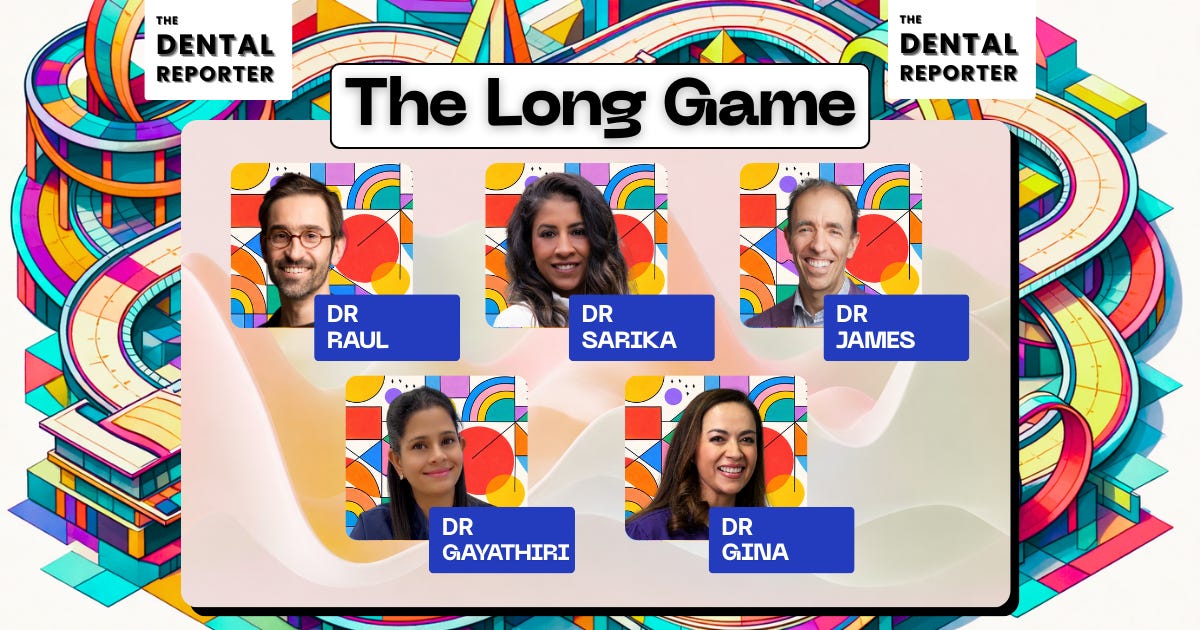
Contributors
Raul Costa, Wimpole Street Dental Clinic, Principal Dentist
Sarika Shah, Platinum Dental Care, Principal Dentist
James Goolnik, Optimal Dental Health, Founder and Principal Dentist
Gayathiri Balasubramaniam, Dental Icon, Principal Dentist
Gina Vega, Bishopsgate Dental Care, Principal Dentist and Clinical Director


What “longevity” means now
Longevity has shifted from making dentistry last to making the dentist, the patient, and the care pathway last.Early-career focus tends to sit on technical mastery and outcomes: better dentistry, fewer failures, more predictable results. With experience, “longevity” becomes broader and more human. It includes prevention and risk assessment, patient education and behaviour change, and selecting approaches that protect biology over time.
It also becomes about sustainability at practice level: maintaining passion, leading teams, adapting to informed patients, and staying connected to purpose so the work remains viable and rewarding over decades.
Principals’ perspectives
Raul Costa, Wimpole Street Dental Clinic, Principal Dentist
I never thought about longevity early in my career; I was only focused on being the best dentist I could be.
Now the question, ‘How and when will this end?’ comes up, and it becomes clear that one has to be proactive to ensure the second half of the journey will be positive.
Sarika Shah, Platinum Dental Care, Principal Dentist
Today, longevity means something far more holistic.
For me, true longevity is rooted in emotional intelligence and, most importantly, self-leadership.
James Goolnik, Optimal Dental Health, Founder and Principal Dentist
Early in my career, “longevity” in dentistry mostly meant making restorations last.
Now, longevity is bigger and more human.
Gayathiri Balasubramaniam, Dental Icon, Principal Dentist
Today, it is rooted in patient education, prevention, and meaningful risk assessment.
Ultimately, longevity is about preserving both patients’ oral health and the sustainability of care itself.
Gina Vega, Bishopsgate Dental Care, Principal Dentist and Clinical Director
To me, longevity in dentistry represents both my professional journey and the enduring quality of care I provide.
My greatest achievement isn’t just in the immediate results but in helping patients change their oral health habits.
Longevity is no longer just about the lifespan of a restoration. It is about building care, habits, and leadership that hold up across a career.
The mindset shift that made work sustainable
Across these perspectives, the shift is away from endurance and toward intention.The work becomes sustainable when dentistry is treated as a craft with inputs that can be designed: time, planning, materials, systems, and communication. The most consistent change is internal. Letting go of perfectionism, slowing down enough to listen properly, and making room for better decisions reduces stress without lowering standards.
On the operational side, investment in digital workflows and modern processes removes daily friction. On the leadership side, stepping into a clear role as a leader, not only a clinician, creates stability for the team and consistency for patients.
Put together, the mindset shift is simple: stop trying to cope with pressure and start building a practice model that prevents it.
Principals’ perspectives
Raul Costa, Wimpole Street Dental Clinic, Principal Dentist
Working smarter, without counting pennies when it comes to materials and lab costs, is essential not only for job satisfaction, but also for efficiency.
Sarika Shah, Platinum Dental Care, Principal Dentist
The single biggest mindset shift that made my work feel more sustainable was moving away from perfectionism.
James Goolnik, Optimal Dental Health, Founder and Principal Dentist
Slowing down, asking better questions, and agreeing on small, realistic next steps reduces pressure on everyone.
Gayathiri Balasubramaniam, Dental Icon, Principal Dentist
Embracing technology and the digital world… allowed us to run a truly paper-free, cloud-based practice.
Gina Vega, Bishopsgate Dental Care, Principal Dentist and Clinical Director
As a principal dentist, I needed to become a leader, not just a clinician.
Sustainability comes from planning, systems, and self-leadership, not relentless pace. When quality, clarity, and calm lead, performance follows.
Pressure without reactivity
The calmest dentistry is rarely the slowest. It is the most deliberate.Pressure is managed before it shows up. Strong diagnosis, front-loaded planning, and enough time at the first visit reduce surprises and protect standards.
When intensity does rise, the move is the same: pause, regulate, simplify the next step, and communicate clearly so the team stays steady. Staying within scope, referring early, and keeping patient benefit as the decision filter prevents rushed choices. Failure is treated as feedback, not a trigger.
Principals’ perspectives
Raul Costa, Wimpole Street Dental Clinic, Principal Dentist
I always make sure I have enough time during the first visit, and then I plan cases well.
Sarika Shah, Platinum Dental Care, Principal Dentist
I focus on pausing, regulating my emotional response, and gaining clarity before taking action.
Strong self-leadership allows me to separate urgency from what is truly important.
James Goolnik, Optimal Dental Health, Founder and Principal Dentist
I pause, breathe, and create a little space so I can respond rather than react.
I simplify: what is the next step, right now?
Gayathiri Balasubramaniam, Dental Icon, Principal Dentist
Practising slow dentistry and allowing adequate time for each patient supports high-quality care.
I work comfortably within my scope and refer appropriately to colleagues and specialists.
Gina Vega, Bishopsgate Dental Care, Principal Dentist and Clinical Director
I protect my standards by always keeping my patients’ best interests at heart.
I take pride in stepping back and considering which treatment will truly stand the test of time, rather than choosing a quick fix.
Plan to prevent pressure: diagnose well, allocate time, and set scope early. When pressure hits, pause, simplify, and choose the patient-centred next step.
What they no longer do, even if it looks productive on paper
Sustainable careers often begin with letting go of habits that appear efficient but no longer serve good dentistry.With experience, clinicians become more selective about what truly adds value to patient care and team wellbeing. Tools, routines, or behaviours that once felt essential are reconsidered when they create stress, inefficiency, or compromise quality. Productivity on paper does not always translate into better outcomes, and many dentists choose to simplify workflows, invest properly in systems, and step away from practices that add pressure without improving results.
Principals’ perspectives
Raul Costa, Wimpole Street Dental Clinic, Principal Dentist
I haven’t used a facebow for more than 15 years.
Sarika Shah, Platinum Dental Care, Principal Dentist
I no longer allow myself to over-stress about situations, especially those beyond my control.
Gayathiri Balasubramaniam, Dental Icon, Principal Dentist
I don’t cut corners on equipment or systems… Instead, I invested in a state-of-the-art surgery designed for both clinical excellence and patient comfort, alongside a fully digital workflow.
Experience teaches that not everything that looks efficient improves care. Letting go of outdated tools and stress-driven habits creates space for better decisions and better dentistry.
The routine outside the clinic that improves how they show up inside it
The best clinical performance is often built after hours, through deliberate habits that protect energy, judgement, and empathy.A strong routine away from the chair is less about productivity and more about readiness. Staying informed about the world can deepen empathy and improve how concerns are understood and handled. Structured morning and evening rituals create consistency, protect sleep, and support long days that mix clinical work with leadership.
Self-care is framed as a professional responsibility, with fitness and creative outlets improving presence, focus, and calm. Clear boundaries at home prevent emotional spillover, allowing recovery and better decision-making the next day.
The through-line is simple: when personal wellbeing is managed on purpose, standards in practice become easier to sustain.
Principals’ perspectives
Raul Costa, Wimpole Street Dental Clinic, Principal Dentist
Being well informed about what’s happening in the world increases the empathy we have for the people around us.
Sarika Shah, Platinum Dental Care, Principal Dentist
I’m a 5 a.m. girl and have a strict morning routine that sets the tone for a positive, productive day.
Gayathiri Balasubramaniam, Dental Icon, Principal Dentist
Prioritising fitness, creative outlets such as dancing and playing musical instruments, and using hypnotherapy techniques to stay calm and focused has made a real difference.
Gina Vega, Bishopsgate Dental Care, Principal Dentist and Clinical Director
I don’t bring work problems home, which gives me the chance to relax and connect with my family.
Protect your capacity outside the clinic if you want to protect your standards inside it. Routines that build rest, focus, empathy, and boundaries are clinical tools, not lifestyle extras.
Closing: The Long Game, practised daily
Longevity is not a single decision. It is the accumulation of thousands of small choices made when nobody is watching.
Takeaways you can apply now
Redefine longevity as more than clinical endurance. It includes judgement, leadership, and a career you can sustain.
Trade urgency for preparation. Better diagnosis, better planning, better systems reduce pressure before it shows up.
Protect standards by slowing your response, not lowering the bar. Pause, get clear, take the next right step.
Stop doing work that looks efficient but adds risk, cost, or stress. If it does not improve outcomes, it is noise.
Invest outside the clinic as seriously as you invest inside it. Sleep, fitness, learning, and recovery are performance tools.
The profession will keep changing. Patients will keep arriving with higher expectations and louder opinions. Technology will keep moving the goalposts. The dentists who thrive are not the ones who sprint harder. They are the ones who build a way of working that holds up under time.
Play the long game. Stay sharp. Stay calm. Keep showing up.
With thanks to the 5 dentists who shaped this edition
Really solid piece on sustainable practice. The shift from 'making restorations last' to 'making the dentist last' is the realframe. That line about investing outside the clinic as seriously as inside it hits hard for any high-stakes profession. I've noticed similar patterns in other fields - the ones who stick around longest aren't the most driven, theyre the ones who figured out how to protect thier capacity for good decisions under pressure.