Patients arrive with more information than ever, and often less certainty. They have seen before-and-after galleries, read reviews, compared prices, and rehearsed what they think they need. The dentist now has two jobs at once: protect clinical decision-making and reduce hesitation without tipping into persuasion.
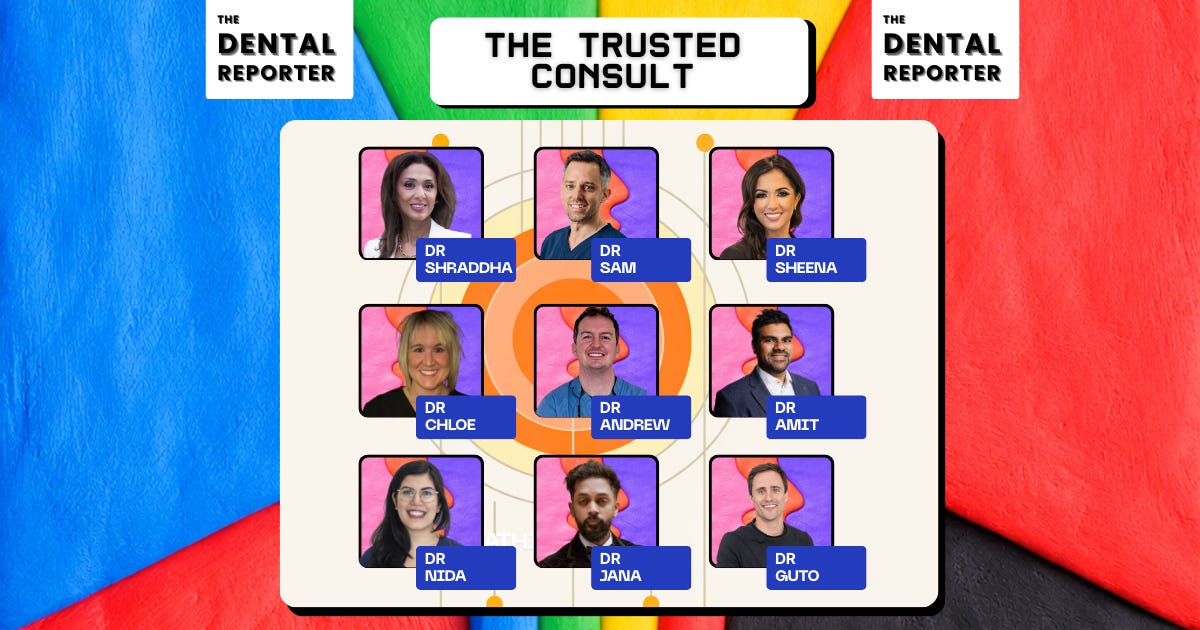
This feature brings together nine UK dentists to show what “trusted” looks like in the room. Not scripts designed to close. Conversations designed to clarify. The aim is a consult that feels calm and premium because it is structured, transparent, and patient-led.
You will see multiple recurring themes: how they open, how they present choices, how they remove uncertainty, and how they handle cost without discounting. Across every section, one pattern holds: patients relax when they feel seen, and they move forward when they truly understand..
Contributors
Dr Shraddha Innani, Principal Dentist, Green Street Dental Practice / Manor Park Dental Practice
Dr Sam Hainsworth, Principal Dentist, Smile Stylist Dental Clinics
Dr Sheena Tanna, Principal Dentist, Billericay Dental Care
Dr Chloe Harrington‑Taylor, Principal Dentist, Hereford Dental Implant Clinic
Dr Andrew Farr, Principal Dentist, Broad Street Dental Surgery
Dr Amit Jilka, Principal Dentist, Abbey House Dental
Dr Nida Kamal, Principal Dentist, Shiraz Endodontic Practice
Dr Jana Denzel, Principal Dentist, Denstudio
Dr Guto Griffiths, Associate Dentist, Dr G Dental


Consultation opening and tone setting
The first few minutes decide whether the patient braces or relaxes
The best openings do not start with treatment. They start with permission. Permission to ask questions. Permission to slow down. Permission to think. That permission changes how the patient hears everything that follows.
What the strongest openings do, every time
Name the purpose of today
Remove the expectation of deciding now
Explain the flow so there are no surprises
Signal that the patient’s priorities lead the plan
Use tone, pace, and body language as clinical tools
Start human, not clinical
Several dentists describe the same discipline: the opening moments are not for technology, not for treatment, not for selling confidence. They are for making the patient feel seen.
“In the first two minutes, my focus is entirely on the person in front of me. I’m listening to them, hearing about their concerns, and building rapport, not introducing technology or discussing treatment. I deliberately slow the pace and keep the conversation human.”
Dr Sheena, Billericay Dental Care
Dr Sheena’s point is not anti-tech. It is about sequencing. Tech can clarify later. It rarely relaxes the patient first.
“Patients don’t relax because of equipment; they relax because they feel seen, heard, and unhurried.”
Dr Sheena, Billericay Dental Care
Make it explicit that this is guidance, not pressure
The highest-trust consults do not imply freedom. They state it.
“In the first moments of a consultation, my focus is on helping the patient feel calm, understood, and un pressured. Many arrive anxious or uncertain, so I start by listening. Not just to symptoms, but to worries and expectations.”
Dr Nida, Shiraz Endodontic Practice
“I explain that my role is to provide clarity, not pressure, and that there is always time to think before deciding.”
Dr Nida, Shiraz Endodontic Practice
That single line changes the patient’s posture. Once the patient believes they can pause, they tend to ask better questions.
This theme repeats across consults:
“In the first two minutes, I make it clear that this is not a sales appointment, it’s a space for clarity. I tell patients they don’t need to decide anything today and that great outcomes come from calm, informed choices rather than rushed ones.”
Dr Jana, Den Studio
“I’m clear that my role is to assess, advise and guide, not to persuade. That immediately changes the dynamic.”
Dr Guto, Dr G Dental
Slow the room down on purpose
Several dentists describe pace as an intervention, not a personality trait.
“In the first two minutes we deliberately slow the room down. I explain that today is about understanding, not deciding.”
Dr Amit, Abbey House Dental
“The intention in the first two minutes is to set the tone for a considered conversation. I’ll often say that there’s no expectation to move forward today unless it feels right for them.”
Dr Sam, Smile Stylist Dental Clinics
This is not soft language. It is boundary-setting. It tells the patient what kind of appointment they are in: one that protects decision-making.
Give the consult a framework so it feels safe
Anxiety rises when the patient cannot predict what happens next. The easiest way to lower it is to explain the flow early, then follow it.
“We outline exactly what will happen, records, scans, photos, discussion, so there are no surprises. I reassure them that they’ll leave with written options and costs, not pressure to commit.”
Dr Amit, Abbey House Dental
“I also outline how the appointment will flow so there are no surprises. If people know what to expect, they will usually start to relax more.”
Dr Sam, Smile Stylist Dental Clinics
Dr Shraddha frames this as tone-setting through structure:
“In the first two minutes of a consultation, I focus on setting both the tone and the framework. I read the room and meet the patient where they are.”
Dr Shraddha, Green Street Dental Practice and Manor Park Dental Practice
“My role is to provide clarity and options, the decision always belongs to the patient.”
Dr Shraddha, Green Street Dental Practice and Manor Park Dental Practice
Dr Chloe is specific about the opening behaviours: welcome, comfort, listening, open questions. She also signals how the team supports clarity.
“In the first two minutes, my nurse and I welcome the patient into the surgery and ensure they feel comfortable, safe and at ease. I begin by listening. Open questions encourage the patient to talk freely about their goals, concerns and motivations.”
Dr Chloe, Hereford Dental Implant Clinic
Dr Andrew’s wording is confident. He starts from an assumption many practices miss: by the time a patient books a consult, they have already made a choice. The early job is to confirm they chose well.
“It’s important to create a friendly yet professional atmosphere. This helps the patient feel comfortable and at ease, and confident in their choice.”
Dr Andrew, Broad Street Dental Surgery
“In this day and age, a patient has already researched other practices and has made an informed choice by booking a consultation. All we need to do is affirm that decision by being welcoming and professional.”
Dr Andrew, Broad Street Dental Surgery
Practical takeaway for dentists
What builds trust in first few minutes? If you strip the language down to function, the “trusted opening” contains four elements:
Permission
Purpose
Process
Pace
“Today is about understanding, not deciding.” (Dr Amit, Abbey House Dental)
“There is always time to think before deciding.” (Dr Nida, Shiraz Endodontic Practice)
“There’s no expectation to move forward today unless it feels right for them.” (Dr Sam, Smile Stylist Dental Clinics)
“My role is to assess, advise and guide, not to persuade.” (Dr Guto, Dr G Dental)
“This is not a sales appointment, it’s a space for clarity.” (Dr Jana, Den Studio)
The first few minutes are not small talk.
They are governance. When you define the purpose, explain the flow, and remove urgency, you create the conditions for consent and clear choices later.
Treatment option presentation and shared decision-making
Clarity is not more information. It is better structure.
In dentistry, the patient rarely struggles because they lack options. They struggle because they cannot compare options. They cannot see the trade-offs clearly enough to choose without feeling steered.
Across these interviews, dentists reduce pressure by standardising how choices are presented. They do not present a “best” plan and then defend it. They present pathways, name what each pathway prioritises, and let the patient choose what matters most.
The shared principles: what the best option presentations have in common
Fewer options, better labelled
Most dentists describe 2 to 3 options as the workable number. The options are named so patients can remember them.
“I usually explain three options: an ideal solution, a simpler alternative, and the option of waiting.”
Dr Nida, Shiraz Endodontic Practice
“We always present three clearly labelled pathways, Stabilise, Restore, and Optimise.”
Dr Amit, Abbey House Dental
“I present options using a structured framework: the least we can do, the most we can do, and the options in between.”
Dr Chloe, Hereford Dental Implant Clinic
“It’s usually conservative, intermediate and comprehensive, each clearly named and explained in plain language.”
Dr Jana, Den Studio
Even though these frameworks were described in different settings, the structure is directly applicable to dentistry: define pathways, avoid jargon, and show the difference between stabilising, improving, and optimising.
Neutral language, no implied “right answer”
The strongest consults make the patient feel ownership. That ownership disappears if the dentist signals preference too early.
“I’m careful with language and avoid label options as ‘best’ or ‘recommended’ upfront. Instead, I explain the trade-offs honestly and relate them back to the patient’s original concerns and lifestyle.”
Dr Guto, Dr G Dental
“Once I understand a patient’s concerns, I can present treatment choices side by side, using neutral language so no option feels favoured.”
Dr Sam, Smile Stylist Dental Clinics
“We explicitly say: ‘There isn’t a right or wrong, only what suits your priorities.’”
Dr Amit, Abbey House Dental
“I often tell patients, ‘There isn’t one right answer, only the right answer for you.’”
Dr Nida, Shiraz Endodontic Practice
Trade-offs are made explicit
Instead of pushing the patient towards a result, best dentists translate options into prioritisation: aesthetics, longevity, invasiveness, maintenance, time.
“Rather than recommending a single option, I explain what each option prioritises, such as aesthetics, longevity or level of invasiveness. This allows patients to decide what matters most to them.”
Dr Sam, Smile Stylist Dental Clinics
“Each option is clinically sound but varies in longevity, invasiveness, and investment.”
Dr Amit, Abbey House Dental
“I focus on outcomes, longevity, maintenance and trade-offs with being minimally invasive.”
Dr Jana, Den Studio
The patient gets space after the options are presented
A subtle but repeated move: pause after outlining choices.
“I deliberately pause after outlining the options, giving patients space to reflect and ask questions without being rushed.”
Dr Sam, Smile Stylist Dental Clinics
That pause is not passive. It is part of the method. It prevents the consult becoming a monologue.
The “do nothing” option
Why it changes the feel of the consult
In dentistry, “do nothing” is often the option the patient needs to hear to believe they are not being sold to.
Dr Shraddha is explicit about making it the first option:
“I begin by explaining that ‘the first option is always to do nothing,’ and that patients deserve to understand the clinical implications and consequences of that choice.”
Dr Shraddha, Green Street Dental Practice and Manor Park Dental Practice
When “do nothing” is real, not rhetorical, the patient hears the rest differently. It creates a baseline, then allows staged pathways to feel like choices, not a funnel.
Visual aids: used well, they reduce pressure
Most dentists here use visuals, but they describe a specific role for them: clarify what the patient is seeing, and what the patient is choosing.
Visuals as shared evidence
Dr Sheena’s approach is structured and collaborative. The scan is a way to guide the patient through information in order.
“It guides the consultation in a clear order, gums, tooth structure, early decay, wear and bite, ensuring the information is comprehensive and nothing is missed.”
Dr Sheena, Billericay Dental Care
Her key behaviour is what happens next: the patient leaves with something they can revisit away from the chair.
“Patients leave with a QR code that lets them download this as a PDF, so they can review it in their own time, away from the clinical environment.”
Dr Sheena, Billericay Dental Care
Dr Amit’s team approach is similar: show the difference rather than ask the patient to imagine it.
“We avoid jargon and use scans, photos, and digital simulations so patients can see the difference rather than guess.”
Dr Amit, Abbey House Dental
Dr Jana uses visuals to support trade-offs, especially minimal-prep versus more invasive options.
“Visual aids are key: scans, photographs and trial smiles help patients see rather than imagine.”
Dr Jana, Den Studio
Dr Guto emphasises before-and-after examples as a “game changer” for clarity, but he also ties options back to the patient’s lifestyle and concerns, which is what prevents visuals becoming pure aspiration.
“Visual aids are massive in my opinion so showing patients similar before and after cases is a game changer for me.”
Dr Guto, Dr G Dental
Visuals as predictive tools, not promises
Dr Shraddha is explicit about this boundary:
“I rely heavily on before-and-after photographs, intra-oral scans, and mock-ups, while clearly explaining that these are predictive tools, not promises.”
Dr Shraddha, Green Street Dental Practice and Manor Park Dental Practice
When that line is stated, the visual becomes a decision aid, not a sales device.
Written summaries: the consult is not complete without a takeaway
A premium consult gives the patient something to think with
Multiple dentists describe the same system: after options are explained, the patient leaves with a written plan that reflects what was discussed.
“Patients leave with a clear written summary of their options, risks, timelines, and costs.”
Dr Nida, Shiraz Endodontic Practice
“Every patient leaves with a written summary outlining options, timelines and costs so they can reflect without pressure.”
Dr Jana, Den Studio
“All patients leave with a clear, written summary of the options discussed, alongside a scan or simulation where appropriate.”
Dr Sam, Smile Stylist Dental Clinics
“Patients leave with scans, photographs and written plans so they can reflect without pressure, ensuring confident and informed decision-making.”
Dr Chloe, Hereford Dental Implant Clinic
“Patients leave with an itemised treatment plan they can reflect on in their own time.”
Dr Shraddha, Green Street Dental Practice and Manor Park Dental Practice
Dr Amit ties written plans to role clarity inside the practice. The dentist diagnoses and frames. The treatment coordinator reinforces, prints, and structures the next steps.
“After the dentist explains the diagnosis, the TCO reinforces it in plain language and provides a printed plan with visuals, timelines, maintenance requirements, and exact fees.”
Dr Amit, Abbey House Dental
Dr Andrew’s approach is built around showing options through patient-facing materials and examples. His key point: give patients resources that explain the options clearly and support confidence through evidence of outcomes.
“It’s important that the patient is given all treatment options and likely success rates.”
Dr Andrew, Broad Street Dental Surgery
Practical takeaway for dentists
Treatment choice feels “pressured” when the patient cannot see alternatives, trade-offs, or time to think. The consult feels “trusted” when you:
Present 2 to 3 named pathways
Include “do nothing” as a real option
Use neutral language and pause
Make trade-offs explicit
Use visuals to clarify, not to promise
Send the patient away with a written summary they can review calmly
Patient uncertainty and trust building
The consult becomes trusted when you make uncertainty visible, then remove it step by step
In elective and cosmetic dentistry, patients rarely say what they are most worried about. They may talk about veneers, aligners, bonding, whitening, implants, or “a smile makeover”, but underneath they are often trying to answer a smaller set of questions:
Do I really need this, or am I being sold to?
Will it look natural?
Will it damage my teeth?
Will it hurt?
What happens long term?
How long will it take, and what will life look like during it?
Will I regret this?
The dentists here remove uncertainty by doing the opposite of what anxious patients expect. They slow down, show evidence, and explain the sequence.
This section maps the main uncertainty patterns that show up in elective and cosmetic consultations, and the specific behaviours these dentists use to replace fear with clarity.
Uncertainty 1: “Am I being oversold?”
Trust is built when the patient can see the rationale for themselves
For cosmetic and elective care, patients often arrive guarded. They want to improve something, but they are wary of being pushed beyond what they need.
Dr Sheena is direct about this being a core uncertainty:
“One of the biggest uncertainties patients have is the fear of being oversold or over treated.”
Dr Sheena, Billericay Dental Care
Her method is to make the discussion collaborative, not interpretive.
“Within seconds, we can show a clear 3D image of their teeth and gums, so when I explain findings, decay, recession, wear, patients can see it for themselves. Nothing feels hidden or subjective. The message is always: ‘We’re looking at this together.’”
Dr Sheena, Billericay Dental Care
Dr Nida describes the same problem in a different way: patients are uncertain about necessity, outcomes, and the experience. Her solution begins with making the problem visible and the outcome realistic.
“Patients are often uncertain about three things: whether treatment is truly necessary, whether it will work, and what the experience will feel like. I try to reduce these worries by slowing the conversation down and making the problem visible.”
Dr Nida, Shiraz Endodontic Practice
Dr Amit frames “need” as a clarity task. He removes it with images and simple explanation.
“We answer ‘need’ with intra-oral photos and scans, explaining pathology in simple terms.”
Dr Amit, Abbey House Dental
What to copy
Bring the patient into the evidence.
Use “together” language that signals shared observation, not authority.
Separate the finding from the plan so the patient can accept the “why” first.
Uncertainty 2: “Will it look natural?”
Cosmetic anxiety drops when expectations become concrete
In elective dentistry, outcome uncertainty often shows up as fear of looking false, too bright, too uniform, or not “them”.
Dr Guto groups outcome uncertainty with choice and commitment. His method: show similar cases and trial the outcome.
“Patients worry about looking unnatural or false. I use before-and-after cases of similar faces and smiles to anchor expectations along with a trial smile done via additive mock up showing the patient exactly what their new smile will look like on them.”
Dr Guto, Dr G Dental
Dr Jana names the same uncertainty set and uses mock-ups and close-up photography to remove imagination gaps.
“The most common uncertainties are: Will it look natural? Will it damage my teeth? And what happens long-term? To address aesthetics, I show real case examples, close-up photography and mock-ups so patients can visualise.”
Dr Jana, Den Studio
Dr Shraddha uses before-and-afters, scans, and mock-ups, but is careful about the boundary. Visuals create clarity. Transparency creates confidence.
“For cosmetic concerns, uncertainty is usually around outcomes and choice. I rely heavily on before-and-after photographs, intra-oral scans, and mock-ups, while clearly explaining that these are predictive tools, not promises.”
Dr Shraddha, Green Street Dental Practice and Manor Park Dental Practice
What to copy
Use similar-case examples, not just highlights.
Use mock-ups to turn “imagine” into “see”.
Say clearly that tools predict, they do not guarantee.
Uncertainty 3: “Will it damage my teeth?”
Tooth preservation has become a trust issue, not just a clinical one
Many cosmetic patients now ask directly about “prep”, enamel preservation, and reversibility. When dentists explain the biology and trade-offs clearly, patients feel safer.
Dr Jana builds trust by comparing minimal-prep and additive options and showing exactly what is and is not done.
“For tooth preservation, I explain exactly what is and isn’t done to their teeth, often comparing minimal-prep and additive options like composite bonding or Invisalign first.”
Dr Jana, Den Studio
Dr Chloe’s also reflects this trend: show the starting point clearly and use digital tools to demonstrate the journey so patients understand what changes and why.
“Scanners, photographs and CBCT scans help patients clearly understand their starting point, including tooth position, bone support and overall oral health.”
Dr Chloe, Hereford Dental Implant Clinic
What to copy
Explain “what we remove” and “what we keep” in plain language.
Compare additive and reductive options explicitly.
Make future maintenance part of consent, not an afterthought.
Uncertainty 4: “Will it hurt?” and “What will it feel like?”
Pain uncertainty reduces when you acknowledge it and describe the experience
Even in cosmetic consults, fear of discomfort is common. Patients may not say it directly. They may ask “how long does it take?” and mean “how bad is it?”
Dr Shraddha’s approach is a simple honesty line that is easy to adopt.
“If something is going to feel uncomfortable, I will always let you know.”
Dr Shraddha, Green Street Dental Practice and Manor Park Dental Practice
Dr Andrew describes pain uncertainty as one of the core questions patients bring.
“The main uncertainties are ‘will it work,’ ‘will it hurt,’ and ‘how much will it cost.’”
Dr Andrew, Broad Street Dental Surgery
Dr Nida focuses on making the experience legible, not just promising it will be fine.
“I often say, ‘You don’t need to decide today, my job is to help you understand what’s happening.’ When patients can clearly see both the problem and the possible pathways forward, uncertainty shifts into understanding.”
Dr Nida, Shiraz Endodontic Practice
What to copy
Address discomfort as part of the plan.
Use “no surprises” language.
Explain the sequence and what the patient will feel at each stage.
Uncertainty 5: “How long will this take?” and “What am I committing to?”
Commitment uncertainty drops when the plan becomes phased and written
Patients worry about time off work, number of visits, downtime, retention, and long-term maintenance. In cosmetic dentistry, patients also worry about whether the plan is open-ended.
Dr Sheena is clear that timelines and flexibility matter as much as the treatment details.
“Patients worry about commitment. I’m clear about timelines, appointments, and flexibility, because understanding the time involved is just as important as understanding the treatment itself.”
Dr Sheena, Billericay Dental Care
Dr Guto writes the commitment and maintenance into the plan.
“I walk through timelines, retention, and long-term care in a written plan. The message is: Nothing here is hidden, you know exactly what you’re signing up for.”
Dr Guto, Dr G Dental
Dr Amit maps timing and longevity in phases.
“Longevity and timing are mapped out on a written phased plan.”
Dr Amit, Abbey House Dental
Dr Chloe’s reassurance line is explicit sequencing:
“You will always know what comes next, and we will guide you through every step.”
Dr Chloe, Hereford Dental Implant Clinic
What to copy
Put the timeline in writing.
Name phases, not just total duration.
Make retention and maintenance part of the initial conversation.
Uncertainty 6: “Will I regret this?”
Regret is reduced when the consult returns to the patient’s “why”
In cosmetic dentistry, regret often shows up as indecision, repeated questions, or sudden disengagement. Sam speaks directly to this.
“We all experience buyer’s remorse. For this reason, the most common uncertainty in my experience is quite simply ‘Am I doing the right thing?’”
Dr Sam, Smile Stylist Dental Clinics
His method is to return to the original motivation and show evidence from similar patients.
“I address this firstly by referring back to the ‘why’ they came in to see us in the first instance.”
Dr Sam, Smile Stylist Dental Clinics
“We will then share with them not only before and after photographs but also video testimonials of patients who had similar concerns at the start of their journey.”
Dr Sam, Smile Stylist Dental Clinics
What to copy
Keep the patient’s “why” visible through the consult.
Use social proof as reassurance, not persuasion.
Emphasise follow-up and continuity so the patient feels held.
Practical takeaway for dentists
If you want trust in elective and cosmetic consults, build an “uncertainty map” into your routine:
Necessity: make the rationale visible
Outcome: show similar cases and mock-ups, state boundaries
Tooth preservation: explain what is and isn’t done
Experience: describe what it will feel like, no surprises
Time and maintenance: write the plan in phases
Regret: return to the patient’s “why”
The consult becomes pressure-free when uncertainty is handled as a clinical problem, not a sales objection.
Fees, value communication, and price objections
A trusted fee conversation is calm, specific, and never rushed
Cost is often the moment where trust is either protected or lost. Patients are not only weighing affordability. They are assessing whether the practice will stay clinical and steady when money enters the conversation.
Across these interviews, the dentists who protect trust handle fees in three consistent ways:
They keep the conversation factual and unhurried
They anchor fees to planning, precision, materials, and long-term responsibility
They create clarity: what is included, what is variable, and what happens next
They also avoid two common traps:
Justifying or defending the fee
Using discounting to get the patient over the line
The first move: slow down, do not defend
When cost becomes the focus, several dentists describe an intentional change in pacing. They do not rush to “solve” the objection. They return to purpose.
“When cost becomes the focus, I slow the conversation down. I explain that fees reflect planning, precision, materials, time, and long-term responsibility, not just the procedure itself. I anchor value by revisiting the outcome we’ve discussed and the problem we’re solving.”
Dr Guto, Dr G Dental
“When fees come up, I anchor the conversation around value not price. I explain that the cost reflects time, planning, materials, laboratory craftsmanship and long-term responsibility, not just the procedure itself. I’m transparent and calm and I avoid justifying or defending the fee.”
Dr Jana, Den Studio
“When cost becomes the focus, I acknowledge it openly rather than trying to soften or avoid it. I’m careful not to defend or justify pricing and instead, I frame it as a reflection of what’s involved and the level of care required.”
Dr Sam, Smile Stylist Dental Clinics
This consistent behaviour matters. Patients often interpret defensiveness as uncertainty, or as a sign that the practice expects pushback.
Make fees legible: what is included, what it protects, what can change
In cosmetic dentistry, “price” is rarely the only issue. Unclear scope and unclear variables create anxiety.
These dentists reduce anxiety by explaining what is included and what the fee is designed to protect.
“I’m transparent about fees early, so there are no surprises. I explain what is included, what isn’t, and what ongoing care and costs looks like. That clarity protects trust.”
Dr Guto, Dr G Dental
“We anchor fees to outcomes, longevity, and safety, not to competitors or promotions. We explain what’s included: diagnostics, clinician expertise, materials, lab work, follow-ups, and long-term maintenance.”
Dr Amit, Abbey House Dental
“When cost becomes the focus, I explain fees transparently, showing how treatment involves planning, materials, surgery, restoration and follow-up care. Breaking down costs stage by stage removes uncertainty and reinforces value.”
Dr Chloe, Hereford Dental Implant Clinic
“When cost becomes the focus, I approach the conversation with complete clarity and structure. I discuss fees within the context of planning, precision, materials, and long-term outcomes, so patients understand they are investing in quality and predictability rather than a single procedure.”
Dr Shraddha, Green Street Dental Practice and Manor Park Dental Practice
The practical fix: three lines that reduce fee anxiety
These interviews point to a simple structure that keeps cost discussions calm:
What’s included: “This covers planning, clinical time, materials, lab work, and follow-up.”
What’s variable: “The final fee can change if X changes. Here is what affects that.”
What’s protected: “This is designed to deliver a predictable outcome and protect long-term health.”
You do not need more persuasion. You need clearer scope.
Finance is introduced as an option, not an incentive
The common failure mode in elective dentistry is introducing finance too early, or making it feel like a nudge. The dentists here frame finance as normal, neutral, and optional.
“Finance is introduced neutrally: ‘Most patients choose to spread this monthly we can show you what that looks like if helpful.’”
Dr Amit, Abbey House Dental
“When I introduce finance, I do so neutrally. I explain it’s simply a way to spread cost, not an incentive to proceed.”
Dr Guto, Dr G Dental
“When introducing finance, I simply do so as a practical tool rather than an incentive. I’ll often say, ‘Some people prefer to spread this over a period of time. If that’s helpful, we can look at that option for you.’”
Dr Sam, Smile Stylist Dental Clinics
“Finance is introduced as a flexibility tool, not a sales lever. I present it neutrally, alongside full-payment options, such as 0% finance up to 12 months. I let patients decide what suits their life.”
Dr Jana, Den Studio
“My role is to provide every option openly, payment, phasing, and finance, so patients always feel in control.”
Dr Shraddha, Green Street Dental Practice and Manor Park Dental Practice
Practical takeaway for dentists
Patients trust cost conversations when they feel treated like adults: clear scope, clear options, no urgency.
Pressure points
What leading dentists do when a patient is close to walking away, rushing, or overwhelmed
A patient pulling back mid-consult is not always about money. It is often about overwhelm. The best responses here share a consistent move: pause the momentum, then reset the plan around foundations, visibility, and time.
Pressure point 1: The patient wants a full-mouth solution now
Several dentists describe a growing trend: patients requesting extensive cosmetic work after social media exposure.
Dr Shraddha describes a case where a patient wanted a full set of crowns and veneers, but periodontal disease changed the decision.
“A patient attended requesting a full set of crowns and veneers after seeing results promoted on social media and overseas treatment trends. She was convinced that a full-mouth cosmetic solution would resolve her concerns. During the consultation, I identified underlying periodontal disease that had not been addressed.”
Dr Shraddha, Green Street Dental Practice and Manor Park Dental Practice
Her reset move: foundations first, then a conservative pathway.
“I slowed the consultation down and reframed the conversation around long-term stability and minimally invasive care.”
Dr Shraddha, Green Street Dental Practice and Manor Park Dental Practice
Dr Amit describes a similar reset when a patient arrived convinced they needed immediate cosmetic work after being quoted elsewhere.
“We paused the planning and said, ‘Before we talk about changing anything, let’s make sure your foundations are healthy.’ We showed them hidden gum issues on scans and recommended stabilising first rather than proceeding with cosmetic work.”
Dr Amit, Abbey House Dental
Dr Chloe describes how she reframes full-mouth requests into conservative pathways.
“It is increasingly common for patients to attend asking either for a full mouth of veneers or to have all of their teeth removed and replaced with full-arch implant supported restorations.”
Dr Chloe, Hereford Dental Implant Clinic
“Often, a far more conservative pathway, such as whitening, discreet alignment with clear aligners and minimal composite bonding, provides excellent results while preserving natural tooth structure.”
Dr Chloe, Hereford Dental Implant Clinic
Pressure point 2: The patient is about to disengage when pricing appears
Dr Sam describes a patient whose body language shifted, then pricing triggered an exit.
“When we reached pricing, it confirmed it and he was preparing to walk away. Rather than pushing forward, I slowed the pace and reframed the conversation visually by showing him a treatment simulation.”
Dr Sam, Smile Stylist Dental Clinics
This is not “show the glossy outcome to close”. It is “use a visual tool to restore understanding” when the patient is losing the thread.
Pressure point 3: The patient wants veneers, but alignment is the real sequence
Jana describes a common pattern: a patient wants the aesthetic result they have seen online, but the safest route is staged.
“A young female patient came in seeing our Instagram portfolio of porcelain veneers and wanted the same. She requested 10 upper and 10 lower porcelain veneers.”
Dr Jana, Den Studio
“I knew the best option would be orthodontics prior to veneers or even orthodontics whitening and minimal bonding as we would to heavily prepare the teeth to get them aligned correctly.”
Dr Jana, Den Studio
His reset is education at a slower pace, so the patient can see why “now” is not best.
Pressure point 4: The patient is emotional, but clarity changes everything
Dr Guto’s story shows what happens when a trial smile moves the patient from abstract hope to visible outcome.
“When I placed the additive mock-up, her reaction stopped the room. She burst into tears but with a huge smile I hadn’t seen once during the consultation or pre-op photos.”
Dr Guto, Dr G Dental
The point is not emotion as a conversion tactic. The point is that visual clarity can remove months of doubt in minutes, when used appropriately and with time.
Pressure point takeaway
When pressure rises, these dentists do not speed up. They slow down and reset the consult around:
Foundations first
Evidence the patient can see
Sequencing and staged pathways
Time to think
The Trusted Consult Checklist
A repeatable quality standard for elective and cosmetic consultations
Opening and tone setting
The patient speaks first
A clear line removes urgency: no decision required today
The consult flow is explained upfront
Pace is deliberate and unhurried
The patient’s priorities lead the discussion
Options and shared decision-making
2 to 3 named pathways are presented
“Do nothing” is included as a real option
Trade-offs are explicit: invasiveness, longevity, maintenance, time
Language remains neutral, no early “best option” framing
A written summary is provided to take away
Uncertainty and trust building
Necessity is addressed with visible evidence
Outcome expectations are anchored with similar cases and mock-ups
Tooth preservation trade-offs are explained clearly
Time and commitment are mapped in phases
Maintenance is discussed upfront, not at the end
The consult includes a pause and permission to reflect
Fees and value communication
Fees are explained calmly with no defensiveness
What is included is stated clearly
Variables and staged approaches are explained
Finance is offered neutrally as an option
No discounting is used to drive commitment
Final takeaways for UK dentists
The first two minutes define whether the patient relaxes or braces. State the rules: clarity, not commitment.
The consult feels pressure-free when options are structured and trade-offs are visible.
Most hesitation is predictable uncertainty. Map it and remove it step by step.
Fees should be explained with the same confidence as the plan. Keep it factual, specific, and unhurried.
When a patient is overwhelmed, slow down. The trusted consult is built on pacing and sequencing.
With thanks to the 9 dentists who shaped this edition