Women now make up the majority of dental graduates in the United Kingdom. That shift, building for decades, has reached a point where the profession’s future is being shaped in large part by female clinicians who are not waiting for permission to lead, speak, or set the terms of how good dentistry is done.
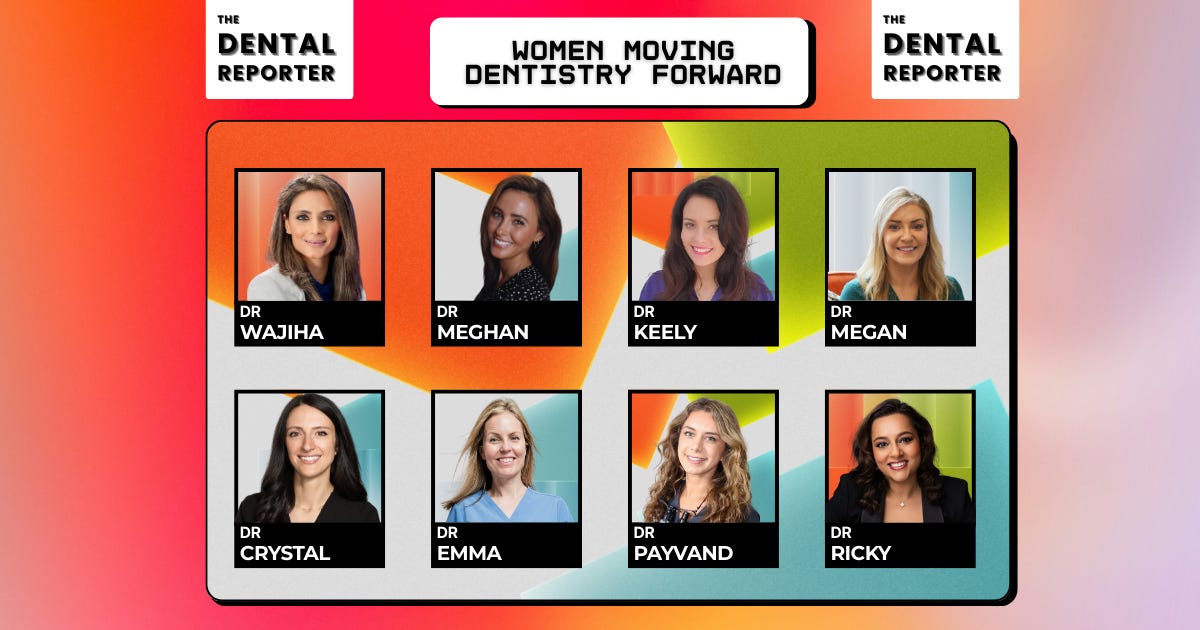
This feature brings together eight women practising across the UK, at different career stages, in different specialisms, and in practices that range from Harley Street to rural England. Their roles include associate, principal, specialist periodontist, and orthodontist. What unites them is not a shared career path, but a shared seriousness of purpose.
Contributors
This feature draws on eight UK female dentists:
Dr Wajiha Basir, Principal Dentist, Trinity House Dental Care
Dr Meghan Chard, Principal Dentist, Rothley Lodge Dental Practice
Dr Keely Thorne, Principal Dentist, The Dental Barns
Dr Crystal Marruganti, Associate Dentist, Harley Street Dental Studio
Dr Megan McCann, Associate Dentist, Phillips & Co Cosmetic Dentistry
Dr Emma Laing, Orthodontist, Dr Emma Laing Orthodontics
Dr Payvand, Specialist Periodontist, The Richmond Dentist
Dr Ricky Ghataura, Associate Dentist, Yew Tree Dental Care and Implant Centre


BELIEF AS A FOUNDATION
Every dentist in this feature was asked about the belief that shapes their practice. Trust appeared in more than one answer, but the more consistent thread was something underneath trust: the conviction that knowing yourself, and being honest about what you do and do not bring, is where strong practice begins.
Dr Megan McCann, Phillips & Co Cosmetic Dentistry, puts it directly.
“Self-belief and efficacy: each individual has something of value that will align with the right people and circumstances. Instead of wondering how and why other people can do things, believe that you can achieve them for yourself.”
For Dr McCann, that conviction has a structural dimension. She helps run a practice owned by her husband, a setup that demands a particular quality of honesty. “We both owe it to each other, the patients, and the staff to be honest about our shortcomings, and play to our strengths,” she says.
“I believe if each person understands themselves better, then the team can become stronger as a result.”
Dr Wajiha Basir, Trinity House Dental Care, frames her core belief in terms of what it produces in the long run.
“The belief that guides both my clinical work and leadership is that trust is built through uncompromising standards. Patients place a great deal of faith in the person treating them, and maintaining that trust requires consistency, integrity, and a commitment to doing things properly every day.”
For Dr Basir, leadership is a practice, not a position. “Treatment planning is not only about technical outcomes; it is also about clear communication, ethical decision-making, and creating an environment where patients feel informed and confident in their choices,” she says. “When patients feel heard and understand their options, trust naturally follows.”
TRUST AS AN OPERATIONAL PRINCIPLE
Several of these dentists describe trust not as something a patient brings with them, but as something that has to be built deliberately through what happens in the surgery.
Dr Keely Thorne, The Dental Barns, has built her practice around a specific architecture for earning it. Her new-patient appointments run a full 60 minutes. The tools are deliberate: scans, photographs, and AI-supported X-rays.
“Trust is my non-negotiable. I earn it through transparency and being thorough, not through ‘dentist knows best.’ It stops dentistry feeling like opinion or sales. It becomes objective findings, explained clearly.”
The outcome she is working towards is agency, not compliance. “My job is to guide patients through what we’ve found, what it means, and the options, including doing nothing, with the pros, cons and long-term maintenance laid out,” she says. “Every interaction is built around sharing information, answering questions, and giving patients control over the decision.”
Dr Payvand, The Richmond Dentist, works in periodontics, a specialism where patients often arrive frightened. Her principle addresses that directly.
“One belief that defines how I practise and lead is that clarity builds trust. Periodontal disease can feel overwhelming for patients, particularly when it is advanced, and I believe my role is to bring calm, structure and evidence-based direction to what can otherwise feel frightening.”
Her application of that principle is consistent. “I explain diagnoses in simple but accurate language, outline realistic options, and I am transparent about prognosis and costs. I do not overcomplicate treatment or offer interventions that lack strong evidence,” she says.
“Whether guiding patients or colleagues, I believe that when people understand the ‘why’ behind decisions, they feel empowered and confident. Trust is built not through reassurance alone, but through clarity and integrity.”
THE HUMAN SIDE OF THE SURGERY
Clinical excellence is a baseline. What distinguishes the practices these women describe is the quality of attention they bring to the person in the chair.
Dr Emma Laing, Dr Emma Laing Orthodontics, holds a standard that is personal.
“Every patient should be given the same care that you would give if they were a family member. I am horrified when people come to me for a second opinion having been spoken to in a dismissive way by a colleague or treated with suboptimal standards.”
She names the difficulty honestly. “Treat patients with kindness and empathy and try your best, whatever is going on outside work. It is not easy and it is a challenging profession as you can’t change what people are going through themselves,” she says, “but you can show up and do your part as best you can.”
Dr Ricky Ghataura, Yew Tree Dental Care and Implant Centre, argues that the relational dimension of dentistry is not secondary to clinical skill. It is core to it.
“Dentistry is not just about teeth, it’s about people. Every patient and team member brings with them their fears, expectations, struggles, stresses and personal stories.”
For Dr Ghataura, the most powerful tools available are not instruments.
“Listening, understanding and communicating are the most powerful tools we have. Being seen, heard and understood are all vital human needs, and if we can truly do this for our team and patients, we will not only have successful careers, we will have more fulfilled lives.”
CURIOSITY AS PROFESSIONAL RESPONSIBILITY
Several of these dentists describe curiosity not as a personality trait, but as something the profession requires. Without it, clinical standards stagnate and practice culture narrows.
Dr Meghan Chard, Rothley Lodge Dental Practice, makes this case with precision.
“One belief that defines how I practise and lead today is that we should never stop trying to improve. This involves constantly trying to push just outside of your comfort zone, questioning the status quo, and reflecting on whether we could have done better ourselves.”
Her model connects what happens clinically with what happens across the team. “Clinically, this means looking beyond symptoms and thinking critically about prevention, early intervention and long-term health. As a leader, it means encouraging our team to ask questions, challenge assumptions and take ownership of their role in improving patient care,” she says.
“When curiosity is combined with accountability, it creates a culture of growth, innovation and higher standards.”
Dr Crystal Marruganti, Harley Street Dental Studio, has built her clinical thinking around a conviction that is gaining ground across the profession.
“The mouth is not separate from the rest of the body. It is the gateway to it. Rather than focusing only on the gums or teeth in isolation, I try to understand the broader picture: nutrition, stress levels, sleep quality, and physical activity. These lifestyle factors have a profound impact on both periodontal and systemic health.”
The direction she is working towards is one the profession is beginning to take seriously. “By helping patients understand this oral-systemic connection, I aim to move dentistry towards a more holistic, preventive model, where improving oral health also contributes to improving general health,” she says.
WHAT THEY WOULD TELL THEIR YOUNGER SELVES
The second question asked each dentist what she would tell herself at the start of her career. The answers are honest, specific, and in several cases sharply different from the advice that typically circulates in dental education.
Dr Megan McCann’s answer centres on authenticity. She describes a period when she felt pressure to conform to an unspoken professional template.
“Authenticity is key. I often felt I had to fit a ‘mould’ of what a good, normal professional person looked and sounded like. It was exhausting, and I was surrounded by people that only perpetuated that feeling of having to present a certain way. I began to burn out and dread going to work.”
The change came when she stopped performing and started practising on her own terms. “As soon as I relaxed into my role, and worked with colleagues and patients in a manner which was more true to myself, I fell back in love with my job,” she says. “I have created a work life that I genuinely enjoy, and that works with my unique offering and strengths.”
Dr Payvand’s message is about timing.
“Back yourself earlier. You do not need to wait until you feel completely ready to step forward, speak up, or pursue something ambitious. Competence grows through action, not permission.”
She also pushes back against the false choice between ambition and balance. “It is acceptable to want both excellence and balance. You can build a respected career without compromising your integrity or your personal life,” she says.
“Set high standards, negotiate fairly, and protect your time. Confidence is not arrogance, it is clarity about your value.”
Dr Crystal Marruganti returns to voice and ownership.
“Trust your voice and your standards earlier. As young dentists, especially young women, we often feel the need to prove ourselves before speaking up, asking for opportunities, or setting boundaries.”
Her broader message is about perspective. “Dentistry is a marathon, not a sprint. Protect your curiosity, keep learning, and surround yourself with people who genuinely want to see you succeed,” she says. “Confidence doesn’t come from knowing everything, but from being willing to grow, innovate, and have fun along the way.”
Dr Keely Thorne focuses on what happens when early-career dentists defer to confidence rather than judgement.
“In the early years it is easy to assume the most confident voice in the room is the ‘right’ one, especially if they have got more years under their belt. But in dentistry, so much is nuanced and judgement-based: when to monitor, when to intervene, how preventive to be.”
Her advice is direct. “Ask why, keep learning, and build your own philosophy based on evidence, outcomes, and what feels ethical to you,” she says.
“You don’t need to be the loudest to be excellent. You just need to be consistent, thoughtful, and brave enough to back your standards.”
Dr Emma Laing’s answer is the most personal in this feature. She addresses something most career advice in dentistry avoids entirely.
“Stop being hard on yourself. In this profession I focus on the minutiae and the details of my work and maintaining high standards. I am my own worst critic.”
On career and family, she is equally direct. “Look at the positive impact you make whilst juggling a family. You can have a family, even if it means taking maternity leave for four weeks twice,” she says. “Don’t put life on hold.”
Dr Meghan Chard connects belief with consistent action over time. She references a line that has stayed with her: Nelson Mandela’s observation that it always seems impossible until it’s done.
“Believe in yourself and be clear about the life and career you want to build. Visualise it and set the intention, even if it feels distant at the start. Progress rarely happens overnight, but small, consistent steps taken day after day add up to more than you realise.”
Her closing thought is grounded and unhurried. “When you look back, you will often be surprised by how far you have come. Stay focused on your standards, keep learning, and trust that steady progress will carry you further than you imagine.”
Dr Wajiha Basir names the trap that catches many early-career dentists.
“Early in your career it is easy to feel that every decision must be flawless and that confidence comes from having all the answers. With experience, you realise that growth in dentistry comes from showing up every day with the same commitment to learning, improving, and maintaining high standards.”
Her reframe is practical in its scope. “A strong career is not defined by single moments, but by the habits you develop and the standards you maintain day after day,” she says.
“Consistency ultimately builds the confidence, trust, and leadership that come with experience.”
Dr Ricky Ghataura adds a dimension that the others touch on but she names directly: the role of community in building confidence.
“I thought I had to have all the answers and handle challenges on my own. True confidence is built through practice and surrounding yourself with a community in which you can feel safe to learn and grow. Mentors, supportive colleagues and trusted friends play an invaluable role in your development.”
She also makes the case for investing in personal development alongside clinical skills. “Self-awareness, emotional resilience and a strong mindset are vital to help us overcome the pressures and challenges of dentistry effectively,” she says. “Taking time to reflect, grow and improve ourselves will make us more confident clinicians and leaders, enabling us to have more fulfilled lives.”
WHAT THIS ADDS UP TO
These eight women are not making the same argument. They practise differently, lead differently, and have reached different conclusions from their years in the profession. But the lines running through every conversation are consistent.
Standards are not negotiable. Whether it is a 60-minute new-patient examination, evidence-based periodontal care, or the refusal to dismiss a patient’s concern, each of these dentists has defined for herself what good looks like and holds to it.
Clarity matters. In patient communication, in leadership, in self-knowledge, clarity is what every dentist here returns to. Not performance. Not volume. Not certainty about every outcome. Clarity about what you stand for and why.
And confidence, the real kind, does not arrive before experience. It is built through it. Through showing up, asking questions, backing your judgement, and maintaining standards even when it is easier not to.
The most practical takeaway this feature offers: confidence is not a prerequisite. It is a result.
With thanks to the 8 dentists who shaped this edition