Dentistry is entering a year where the tools are louder than the principles. AI diagnostics, scanners, same-day workflows, cosmetic demand, and rising patient expectations can all pull practice in different directions. The clinicians who stand out in that environment are not the ones chasing pace. They are the ones who can name what they will not trade.
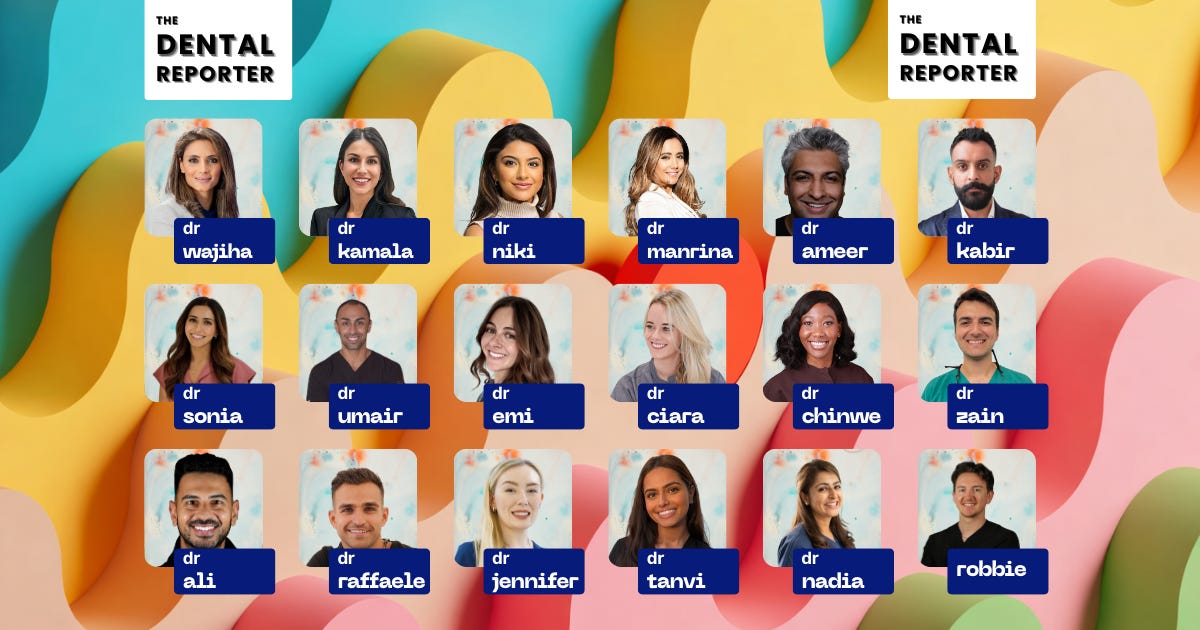
For the 2026 Edition of Dental Reporter’s Thumb Rules of Modern Dentistry, we asked 18 clinicians five questions that force a clean answer: one clinical non-negotiable, one leadership habit, one learning rule, one operational rule, and one burnout boundary.
The responses converged on a single theme: in 2026, quality will be judged by decision-making, not just how well dentistry is executed, but how well it is planned, explained, documented, and protected from short-termism. The clinicians here repeatedly return to restraint, evidence, transparency, and systems that hold up when pressure rises.
This is not a prediction piece. It is a standard-setting piece, built from what clinicians are already practising, already noticing in patients, and already trying to protect inside their diaries and teams.
18 Clinicians Defining Dentistry’s Thumb Rules


Chapter 1: The clinical non-negotiable
In 2026, high-quality dentistry will not be defined by how advanced the technology is in the building. It will be defined by whether clinical judgement stays in charge of it. Across these answers, the centre of gravity is longevity: preserving tooth structure, respecting biology, planning in context, and using digital tools to strengthen diagnosis and consent, not to shorten thinking.
Protect biology through precise planning.
Use digital tools to strengthen diagnosis, consent, and predictability, but keep clinical judgement in charge, prioritising longevity, minimally invasive decisions, whole-mouth context, transparency, and a consistently trusted patient experience.
The rules, in their words
Dr Kamala Aydazada, Founder, Kensington Cosmetic Dentist
“Longevity is the ultimate goal. Fast transformations are tempting, but if it won’t age well, it is not the best option. We saw many dental trends come and fade in the previous years. In my private practice based in Central London, we see a remarkable shift towards a long-term dental health among our patients.”
Dr Manrina Rhode, Cosmetic Dentist, CEO, DRMR
“Precision in diagnosis and planning before treatment. In 2026, high-quality dentistry will be defined less by the hands that carry out the treatment and more by the decisions made before a bur ever touches a tooth. Advanced diagnostics, digital planning and risk assessment must translate into clearer, more honest treatment pathways for patients.”
Dr Ameer Allybocus, Clinical Director, Morpheus Dental Sedation
“High quality dentistry in 2026 comes down to one rule. You never stop developing. Skills expire fast. Knowledge dates even faster. Safe sedation demands constant training in drugs, monitoring, airway control, and human factors. One outdated habit can put a patient at risk.”
Dr Wajiha Basir, Principal Dentist, Trinity House Dental Care
“A defining non-negotiable clinical principle for high-quality dentistry in 2026 is a commitment to minimally invasive dentistry. As materials, imaging, and digital planning continue to advance, the ethical responsibility to preserve natural tooth structure becomes even more critical. High-quality care will be judged not by how much dentistry is done, but by how much biology is respected.”
Dr Niki Keyhani, Principal Dentist, Horsham Dental Studio
“The use of digital technology will be unavoidable in 2026. As we move toward 2026, the routine use of clinical photography and digital scanners is becoming standard practice. Artificial intelligence is increasingly influencing how we diagnose caries, communicate findings to patients, and present treatment plans. High-quality dentistry now demands consistent use of technology - it can no longer be considered optional.”
Dr Kabir Bhogal, Principal Dentist & Owner, Revive Clinic
“Good dentistry should extend the life of teeth, not shorten it for the sake of dramatic cosmetic results. Preserving enamel, respecting soft tissue, and choosing additive or minimally invasive options whenever possible leads to restorations that look natural and hold up over time.”
Dr Nadia Ahmed, Consultant Orthodontist & Associate, The Orthodontic Centre
“I would highlight the importance of evidence- based treatment planning and using high quality upto date research to support clinical decisions being made as well as embracing technology. As an Orthodontist, high quality records, accurate diagnosis and careful treatment planning is fundamental to the best patient care.”
Dr Ciara Ennis, Orthodontist, Crotty Orthodontics
“In 2026, the defining non-negotiable principle of high-quality dentistry or orthodontics is unwavering commitment to evidence-based care. Whilst AI-driven treatment planning and digital workflows can offer work flow efficiency and incredible visual appeal, they simply cannot replace sound clinical judgment.”
Dr Jennifer Rawes, Associate, Ten Dental
“High-quality dentistry in 2026 will be defined by a comprehensive, patient-centred approach rather than single-tooth decision-making. Every intervention should be planned within the context of the whole dentition, occlusion, periodontal health, function, aesthetics, and the patient’s long-term risk profile.”
Dr Umair , Associate, Cherrybank Dental Spa and SmilePlus Dental Care
“Keeping the patients’ best interest at heart when making clinical decisions should be the number one rule when coming up with treatment plans. Always treat your patients with dignity and respect, just like you would like your loved ones to be treated.”
Dr Emi Mawson, Associate, Dental Logic
“The non-negotiable clinical principle that I believe will define high-quality dentistry in 2026 is a health-first approach and ‘undetectable’ restorations. The new attitude of the era is quiet luxury. Natural, timeless results rooted in health and longevity rather than dramatic or unnatural cosmetic enhancements.”
Dr Ali Quraishi, Associate, Westmount Dental Practice
“High quality dentistry in 2026 will be defined by consistency in delivering an exceptional patient experience. Patients don’t judge care in isolated moments, they judge patterns. From the first phone call to post treatment review, consistency builds trust, reduces anxiety and signals professionalism.”
Dr Tanvi Bagtharia, Associate, Dental Beauty Benfleet Studio
“Transparency. Transparency is key and it is transparency that builds trust. Being transparent with costs, consent, complications and realistic expectations will not only build trust between you and your patients but will mean that when there are rare events that lead to a less favourable course or outcome then patients are more understanding.”
Dr Raffaele Cedrola, Associate, Bespoke Dental Practice
“..speed is not a measure of quality. High-quality dentistry will be defined not by how quickly treatments are completed, but by their enduring health and function. Planning for longevity requires more than skill”
Dr Zain Rizvi, Associate, Merivale Dental Practice
“Quality dentistry is often a result of comprehensive planning combined with precise execution. As we become increasingly reliant on artificial intelligence to assist us, it’s important to ensure that we are still paying close attention to our treatment planning process as well as refining the practical skillset for which there is currently no substitute for.”
Chapter 2: The leadership habit
In 2026, leadership is not a personality trait. It is a design choice. The practices that hold their standards will be led by owners who refuse to become the bottleneck, who create clarity at each patient touchpoint, and who invest in people with the same seriousness they invest in equipment.
Across these answers, there is a consistent rejection of reactive management. The language is systems, accountability, coaching, trust, and learning cultures that do not depend on one person having all the answers.
Design leadership that removes friction and grows people.
Lead with clarity and values, trust your team with real ownership, develop capability through feedback and coaching, and adopt change and AI with accountability and shared learning.
The habits, in their words
Dr Kamala Aydazada, Founder, Kensington Cosmetic Dentist
“Today’s patients don’t compare your clinic to other practices; they compare you to Amazon, Apple, and Uber. They expect simple explanations, fast responses, and clear next steps. For dentists and dental owners, this requires a mindset shift: design the patient experience like a system, not a series of conversations.”
Dr Manrina Rhode, Cosmetic Dentist, CEO, DRMR
“Embracing AI as a decision-support tool, not a replacement for clinical or human judgement. Practice owners going into 2026 must develop the mindset of curiosity over fear when it comes to AI. Used well, AI can enhance diagnostics, streamline workflows, improve patient communication.”
Dr Ameer Allybocus, Clinical Director, Morpheus Dental Sedation
“Put your team first. Dentistry is demanding. Long days, high responsibility, constant pressure. If your people feel supported, they stay engaged, loyal, and accountable. That means listening properly, investing in training, protecting wellbeing, and creating clear paths to grow.”
Dr Wajiha Basir, Principal Dentist, Trinity House Dental Care
“One essential leadership mindset every practice owner must develop going into 2026 is intentional, values-led leadership over reactive management. High-performing practices will be shaped by leaders who are clear on their vision, communicate it consistently, and make decisions aligned with long-term purpose rather than short-term pressure.”
Dr Niki Keyhani, Principal Dentist, Horsham Dental Studio
“Going into 2026, every practice owner must lead with the expectation that standards will continue to evolve - clinically, technologically, and even patient expectations. This means holding themselves and their teams accountable to best practice, embracing change early rather than reactively, and being willing to review and refine systems continuously.”
Dr Kabir Bhogal, Principal Dentist & Owner, Revive Clinic
“Learning to trust your team and let go of trying to do everything yourself will be essential going into 2026. Practices struggle when the owner becomes the bottleneck. When you surround yourself with capable people and give them real responsibility, the practice runs better.”
Dr Jennifer Rawes, Associate, Ten Dental
“A defining leadership mindset for 2026 is developing people, not just managing output. Practice owners are responsible on not simply focusing solely on KPIs, rotas, and productivity, but take active responsibility for growing the capability and confidence of their clinicians and wider teams.”
Dr Umair , Associate, Cherrybank Dental Spa and SmilePlus Dental Care
“Reflection on past cases and experiences pave the way for a smoother future. Dentistry is an extremely challenging career, every day you are learning and trying to improve. Leave the ego at the door, be humble, as there is always more to learn.”
Robbie Stewart, Dental Therapist, DRMR
“This means encouraging open dialogue, valuing feedback, and committing to continuous learning together rather than in silos. When teams learn from one another, standards rise organically, communication improves, and accountability becomes shared rather than enforced.”
Chapter 3: The learning and upskilling rule
In 2026, learning is not an add-on to the job. It is part of the duty of care. The clinicians who answered this question do not argue for more courses. They argue for better learning: intentional, applied, and tied to outcomes.
A consistent warning runs through the replies. Dentistry has never had more information available, and yet the risk of distraction has never been higher. The learning rule that separates serious progress from noise is direction. Learn what improves your judgement, your documentation, your communication, and your ability to deliver predictable care. Seek mentorship deliberately. Use reflection as a clinical tool. Invest in the digital skills that strengthen diagnosis and consent, without letting technology replace thinking.
Learn with intent, then apply.
Choose selective upskilling that improves outcomes, judgement, communication, and documentation, seek mentorship deliberately, reflect on your work, build digital competence and photography discipline, and use discomfort as a signal for where growth matters.
The rules, in their words
Dr Manrina Rhode, Cosmetic Dentist, CEO, DRMR
“The dentists who will shape the future are those who don’t just chase CPD points, but deliberately study other industries from hospitality and tech to retail and leadership to see what makes experiences seamless, teams engaged, and businesses resilient. Translating ideas from outside dentistry into practice operations, patient experience, and team culture will define the practices that thrive in 2026 and beyond.”
Dr Ameer Allybocus, Clinical Director, Morpheus Dental Sedation
“Chase what makes you uncomfortable. Growth lives there. The areas you avoid are usually the areas that will raise your standards the most. That might be surgery, sedation, communication, leadership, or decision making under pressure. Do not aim to feel comfortable. Comfort caps progress.”
Dr Wajiha Basir, Principal Dentist, Trinity House Dental Care
“One essential upskilling rule dentists should commit to for the future is continuous, selective learning over reactive course-collecting. As dentistry evolves rapidly, excellence will depend not on the number of courses attended, but on how deliberately learning is chosen and applied.”
Dr Niki Keyhani, Principal Dentist, Horsham Dental Studio
“Often, I hear the buzz words; dentists taking another composite bonding course or training in ‘Implants’ because it will be the next big thing. We need to move beyond box-ticking CPD and commit to regularly upskilling in ways that directly change how we practise.”
Dr Jennifer Rawes, Associate, Ten Dental
“One essential learning rule for the future is committing to self-aware, reflective upskilling rather than course-collecting. Dentists must regularly assess their own strengths, limitations, and blind spots, and direct education towards areas of genuine weakness—not just areas of interest or trend.”
Dr Emi Mawson, Associate, Dental Logic
“One of the most important upskilling rules for the future is to develop a deep self-awareness that will guide how you learn. Understand your strengths and limitations, and pursue to master what genuinely excites you.”
Dr Ali Quraishi, Associate, Westmount Dental Practice
“One learning rule dentists should commit to is upskilling with intent and not impulse. I believe in learning new skills to implement them meaningfully into daily clinical work, not simply because they are popular or heavily promoted.”
Dr Zain Rizvi, Associate, Merivale Dental Practice
“Mentorship is invaluable but does not occur passively. Learn to seek out dentists whom you want to learn from and organise the mentorship & what you would expect it to look like. It is a far greater use of your time and money than didactic teaching”
Dr Sonia Rajput, Associate, Canon House Clinic
“Always photograph and reflect your work for each case. It’s the only way to keep progressing!”
Chapter 4: The operational rule
In 2026, sustainability is not a feeling. It is a structure. The clinicians who answered this question describe the same dividing line from different angles: struggling practices run on memory, instinct, and heroic effort; sustainable practices run on repeatable systems, clear communication, and decisions made from facts.
Operational strength does not mean turning dentistry into a factory. The opposite, in many of these answers, is the point. When workflows are defined, roles are clear, schedules are realistic, and the practice measures what matters, the team has more capacity for human care, and patients experience less friction and more trust.
The operational rule is therefore not just about efficiency. It is about reliability: the ability to deliver the same standard on a busy day, in a staff change, through technology shifts, and through patient demand cycles.
Make quality reproducible.
Document and standardise workflows, track meaningful data, train the team, communicate value clearly to existing patients, and build systems that create trust and consistency without relying on heroic effort.
The rules, in their words
Dr Manrina Rhode, Cosmetic Dentist, CEO, DRMR
“Document everything, then standardise with AI. In 2026, sustainable practices will separate themselves through reproducibility. Every procedure, from clinical workflows to patient communications, should be clearly documented in a practice manual. The real game-changer is using AI to help write, organise, and update these manuals.”
Dr Ameer Allybocus, Clinical Director, Morpheus Dental Sedation
“Build systems that run without you. Too many practices depend on heroic effort from owners and key staff. That model breaks under pressure. Sustainable practices standardise booking, triage, consent, recalls, and follow ups. They track simple numbers every week. Chair utilisation, DNA rates, treatment conversion, cash flow.”
Dr Wajiha Basir, Principal Dentist, Trinity House Dental Care
“One operational rule that will separate sustainable practices from struggling ones in 2026 is building systems that create trust, not just efficiency. Practices that thrive will invest time in clear workflows, realistic scheduling, and defined roles—while also allowing space for meaningful connection with both teams and patients.”
Dr Niki Keyhani, Principal Dentist, Horsham Dental Studio
“In 2026, sustainable practices will be those that track and act on meaningful data — from chair utilisation and case acceptance to patient retention and clinical outcomes. Practices that rely on instinct rather than insight will struggle, while those that use data to drive decisions will operate more efficiently, adapt faster, and remain financially and clinically sustainable.”
Dr Kabir Bhogal, Principal Dentist & Owner, Revive Clinic
“Practices that clearly show patients the value of the dentistry they’re providing will be the ones that stay strong in 2026. Your existing patients already trust you. When you take the time to explain why a treatment is recommended—and introduce new services in a way that clearly benefits their health, comfort, or long-term outcomes—case acceptance improves without needing heavy marketing.”
Dr Chinwe Akuonu, Associate, Borough Dental Care
“In 2026, sustainable dental practices will be defined by strong, simple systems that support both teams and patients. This means clear workflows, well-defined roles, efficient scheduling, and smart use of digital systems to reduce friction and inconsistency.”
Dr Jennifer Rawes, Associate, Ten Dental
“One operational rule that will separate sustainable practices from struggling ones in 2026 is making people feel genuinely valued through consistent, high-quality communication. Practices that invest in clear expectations, regular feedback, and open dialogue with both staff and patients build trust, engagement, and loyalty.”
Chapter 5: The rule for avoiding burnout
Burnout is rarely sudden in dentistry. It accumulates through cognitive load, compressed diaries, emotional responsibility, and the quiet pressure of always being “on.” The clinicians here describe the same safeguard in different forms: protect time, protect energy, protect decision space, and stop carrying what the whole system should hold.
What stands out is how practical the boundary is. Burnout prevention is not positioned as motivation. It is positioned as clinical safety, longevity, and leadership. The rule is not to do less. The rule is to work in a way that is sustainable enough to keep standards high.
Protect capacity to protect standards.
Guard time, energy, and decision space through boundaries, delegation, planning, realistic pacing, breaks, longer sessions where needed, recovery rituals, and a life outside the clinic.
The rules, in their words
Dr Manrina Rhode, Cosmetic Dentist, CEO, DRMR
“Protect your time like it’s part of your treatment plan. Running a dental practice can easily consume every waking moment, so I treat my own schedule as a non-negotiable part of the business. That means setting clear boundaries: dedicated time off, protected blocks for personal projects or exercise, and realistic working hours for both myself and my team.”
Dr Ameer Allybocus, Clinical Director, Morpheus Dental Sedation
“Protect your energy as seriously as your diary. Dentistry drains focus, posture, and emotional bandwidth. If you run flat out every day, the work eventually takes more than it gives back. I plan recovery with intent. Clear start and finish times. Proper breaks. Days without surgery.”
Dr Wajiha Basir, Principal Dentist, Trinity House Dental Care
“One rule I follow to avoid burnout in a dental practice is delegating with trust, not guilt. Burnout often stems from carrying responsibility that doesn’t require clinical ownership. I focus on staying in my zone of highest value and empowering my team to take ownership of systems, communication, and patient flow.”
Dr Niki Keyhani, Principal Dentist, Horsham Dental Studio
“At the start of the day, take a moment to identify whether you’re in an analytical, social, or creative state. If you’re feeling analytical, focus on tasks that require concentration, such as reviewing reports, treatment planning, or managing accounts. Check in with yourself mid-day, as energy modes can shift, and adjust your tasks accordingly.”
Dr Ciara Ennis, Orthodontist, Crotty Orthodontics
“One rule I try to follow to avoid burnout is protecting my decision-free time outside the clinic. Dentistry requires sustained cognitive focus, continuous risk assessment, and emotional attentiveness, often without pause—an intensity that accumulates quietly and, if unrecognised, leads to significant mental fatigue over time.”
Dr Nadia Ahmed, Consultant Orthodontist & Associate, The Orthodontic Centre
“Invest in time for yourself. Without this, you can’t be the best version of yourself for your team or patients. Take time to practise mindfulness and meditation. It’s truly a game changer to train your mind to manage challenging and stressful situations more calmly and effectively with many proven health benefits.”
Dr Chinwe Akuonu, Associate, Borough Dental Care
“One rule I follow to avoid burnout is intentionally building a life beyond the dental chair. Dentistry is demanding, and working non-stop eventually leads to exhaustion, not excellence. I also believe strongly in working part-time where possible and safeguarding at least one day each week for rest, family, or personal growth.”
Dr Jennifer Rawes, Associate, Ten Dental
“One rule I follow to avoid burnout is to protect balance by staying connected and intentional. I prioritise a strong professional and personal support network so challenges are shared rather than carried alone. I deliberately balance clinical work with development, personal time, and physical activity, ensuring no single area consistently dominates the others.”
Dr Zain Rizvi, Associate, Merivale Dental Practice
“Try and take pleasure in the small, every day things - whether it be a new piece of equipment that you have invested in, or a positive interaction with staff/patients. Challenge yourself clinically so that you are never bored or “too comfortable”. And learn to take a break every 8-10 weeks - even if that means a few days off at home.”
Dr Raffaele Cedrola, Associate, Bespoke Dental Practice
“Follow the P’s: Proper Planning and Preparation Prevent Poor Performance. Burnout is often the result of constant pressure rather than workload alone. Being organised and efficient with clinical time is essential—looking ahead in the week to ensure you and your nurse are fully prepared prevents unnecessary stress.”
Dr Emi Mawson, Associate, Dental Logic
“A mentor of mine taught me a series of golden rules. The one that has protected my peace the most is ‘do not own the patient’s problem’. My role is to provide clear options, honest guidance, and high-quality care, not to submit to unrealistic expectations or timelines.”
Dr Sonia Rajput, Associate, Canon House Clinic
“Schedule longer appointments, and allow a break for patients and yourself half way through long sessions.”
Closing: The 2026 standard
Dentistry will keep accelerating, the question is what stays steady.
Across these responses, the strongest clinicians are not chasing novelty. They are tightening the fundamentals that protect outcomes: planning that respects biology, systems that hold quality in place, learning that changes behaviour, leadership that removes friction, and boundaries that keep judgement intact.
You can read each section as its own rule. In practice, they operate as one. When diagnosis is precise, treatment becomes more conservative. When teams are trusted and trained, delivery becomes consistent. When systems are documented, patients feel clarity. When time and energy are protected, standards stop slipping under pressure.
That is the modern advantage in 2026. Not louder dentistry. Deliberate dentistry.
With thanks to the 18 clinicians who shaped this edition
Dr Wajiha Basir - Principal Dentist, Trinity House Dental Care
Dr Kamala Aydazada - Founder, Kensington Cosmetic Dentist
Dr Manrina Rhode - Cosmetic Dentist & CEO, DRMR
Dr Niki Keyhani - Principal Dentist, Horsham Dental Studio
Dr Kabir Bhogal - Principal Dentist & Owner, Revive Clinic
Dr Ameer Allybocus - Clinical Director, Morpheus Dental Sedation
Dr Sonia Rajput - Associate Dentist, Canon House Clinic
Dr Umair Mohammed - Associate Dentist, Cherrybank Dental Spa and SmilePlus Dental Care
Dr Emi Mawson - Associate Dentist, Dental Logic
Dr Ciara Ennis - Orthodontist, Crotty Orthodontics
Dr Chinwe Akuonu - Associate Dentist, Borough Dental Care
Dr Zain Rizvi - Associate Dentist, Merivale Dental Practice
Dr Ali Quraishi - Associate Dentist, Westmount Dental
Dr Raffaele Cedrola - Associate Dentist, Bespoke Dental
Dr Jennifer Rawes - Associate Dentist, Ten Dental
Dr Tanvi Bagtharia - Associate Dentist, Dental Beauty Benfleet Studio
Dr Nadia Ahmed - Consultant Orthodontist & Associate, The Orthodontic Centre
Robbie Stewart - Dental Therapist, DRMR