Most patients arrive at their first appointment thinking about the chair, the drill, or the bill. Very few arrive thinking about their heart, their diet, or what silence in the mouth might mean.
That gap is one of the bigger public health problems nobody talks about enough.
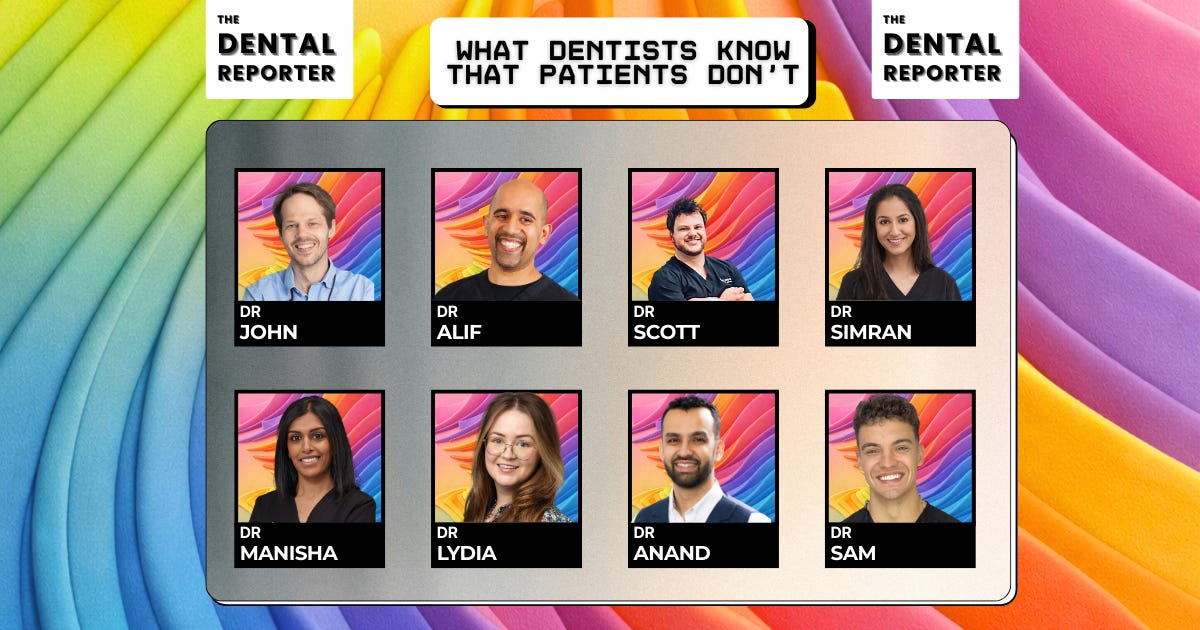
For World Oral Health Day, The Dental Reporter gathered eight dentists from across the UK. Their perspectives form something close to a manifesto for modern oral health.
Contributors
Dr Alif Moosajee, Principal, Oakdale Dental
Dr Scott Phillips, Principal, Phillips & Co Cosmetic Dentistry
Dr John Barclay, Principal, DRJB Smile Clinic
Dr Simran Bains, Associate, Rock Dental
Dr Samuel Matthews, Associate, Harwood Dental Care
Dr Lydia Sharples, Associate - Bespoke Smile & Director - Apex Endodontics
Dr Anand Mistry, Endodontist, Aspects Dental
Dr Manisha Mathi, Associate, Moltons Dental & Aesthetics


The danger patients do not feel
The first message is simple. The most common dental problems are often silent.
Dr Alif Moosajee, Oakdale Dental, puts it directly:
“Tooth decay and gum disease are both silent and preventable. They don’t cause pain until they become very serious.”
That silence is the problem. Patients often assume that if nothing hurts, nothing is wrong. Dentistry rarely works like that.
Dr Scott, principal at Phillips & Co Cosmetic Dentistry, calls them “silent offenders.” Gum disease and tooth erosion, he notes, are generally painless until advanced. Early detection is everything. Dr Alif agrees: “If problems are found early, the fix is far more straightforward.”
This is one of the hardest ideas to communicate in oral health. Prevention asks people to act before there is pain, before there is urgency, and before there is visible damage. It asks them to value what has not happened yet.
Your mouth is not a separate organ
Several dentists pushed further. Not just a case for regular appointments, but a more fundamental reframing of what the mouth actually is.
Dr Simran, associate dentist at Rock Dental, puts it plainly:
“Your mouth is a window into the health of the rest of your body.”
That is not a slogan. It is a clinical reality. A routine examination can reveal nutritional deficiencies, acid reflux, diabetes. A narrow palate can point to poor sleep. Gum disease has been linked to inflammation throughout the body, including the heart.
Dr Lydia , associate at Bespoke Smile, builds on this:
“Problems in the mouth can signal wider conditions, from vitamin deficiencies to autoimmune disease. That’s why we have to look at patients as a whole, not just their teeth.”
Dr John, principal at DRJB Smile Clinic, is the most clear:
“Your diet shapes the bacterial biome in your mouth and gut. When that balance is disrupted, the consequences aren’t limited to teeth and gums. Oral disease is part of a wider inflammatory process that can influence the rest of the body. Looking after your mouth isn’t cosmetic. It is foundational to health.”
For these dentists, the mouth and the body are the same conversation. They always were.
Prevention is daily, not occasional
There is a third thread running through these perspectives, and it is the one that asks something of the patient.
Dr Samuel, associate dentist at Harwood Dental Care, is direct:
“Your mouth isn’t separate from the rest of your body. What you eat, how often you snack, how well you clean between your teeth. Most dental disease isn’t sudden or random. It’s entirely preventable by making healthier small decisions every day.”
Dr Anand, endodontist at Aspects Dental, takes a wider view:
“We have freely available access to information and resources that enable us to prevent damage to our teeth and avoid the need for treatment altogether.”
So the issue is rarely a lack of advice. More often, it is the failure to act on it early enough or consistently enough. Simple does not always feel urgent until the consequences arrive.
Dr Manisha, associate dentist at Moltons Dental & Aesthetics, makes the responsibility question unavoidable:
“Dentists don’t create healthy mouths. Patients do. Our role is to guide and treat, but the real difference is made by the habits you practise every day.”
That does not reduce the role of the dentist. It defines it properly.
What they would put on a billboard
Given one month and every high street in the UK, these dentists chose their words carefully. What came back was sharper, more instinctive. Less room to qualify. More room to mean it.
Dr John from DRJB Smile Clinic went straight for consequence:
“A £3 toothbrush or a £3,000 dental bill. Your choice. Brush your teeth. Help yourself, not your dentist.”
It lands because it is true, and because the maths is hard to argue with.
Dr Alif from Oakdale Dental kept it simple:
“If you’re serious about your health, don’t neglect your mouth.”
No statistics. No clinical language. Just a direct challenge to the way most people separate oral health from everything else.
Dr Scott from Phillips & Co Cosmetic Dentistry stayed with the long game:
“Dental health needs consistent and regular maintenance, tailored to the individual. It’s important to commit to the yearly regimes to prevent issues. Most of the issues we treat daily could have been avoided if the right treatment was offered years earlier.”
The frustration in that last sentence is quiet but real. This is a dentist who has spent a career treating problems that should never have reached him.
Dr Anand from Aspects Dental and Referral brought it back to the plate:
“Your teeth see what you eat. Less sugar. Fewer snacks. More real food.”
Simple. No elaboration required.
Dr Lydia from Bespoke Smile chose something warmer:
“Look after your teeth, and your teeth will look after you. A healthy smile isn’t just about appearance, it’s about your overall wellbeing. Brush twice a day, floss regularly, and don’t skip your dental check-ups. Small daily habits can prevent big problems later.”
It reads like advice from someone who genuinely means it.
Dr Simran from Rock Dental and Dr Samuel from Harwood Dental Care both used their billboard to address something the profession is watching closely.
Dr Simran:
“Ethical cosmetic dentistry enhances healthy teeth; it doesn’t replace them unnecessarily. More people are travelling abroad for quick cosmetic fixes, often without realising how much healthy tooth structure may need to be removed. The best cosmetic dentistry is conservative, carefully planned, and designed to keep natural teeth healthy and functional for as long as possible.”
Dr Samuel put it plainly:
“Thinking about Turkey teeth? Think long term before you think cosmetic. Good cosmetic dentistry should preserve your natural teeth, not sacrifice them.” Neither is against cosmetic dentistry. Both are against the shortcuts that cost patients more than they bargained for.
The last word belongs to Dr Manisha from Moltons Dental & Aesthetics:
“The best dentistry is the dentistry you never need. Prevention is better than cure.”
It is the quietest line of the eight. It is also the one that says everything.
The first appointment is not the starting point
Every dentist in this piece sees the same pattern. Patients who arrive too late, with problems that could have been caught early or avoided entirely. Not because they did not care about their health, but because nobody had told them to look.
That is beginning to change.
The next generation of patients will walk into their first appointment knowing that their mouth is not an isolated concern. That silence is not safety. That the daily habits they build are the most powerful tool in their own oral health.
World Oral Health Day is one day. The habits that protect a mouth are built across a lifetime. The distance between the two is where most of the damage happens.
With thanks to the 8 dentists who shaped this edition